

The Ogden Street Festival: A lost local tradition
By Sarah Langsdon
Ogden History
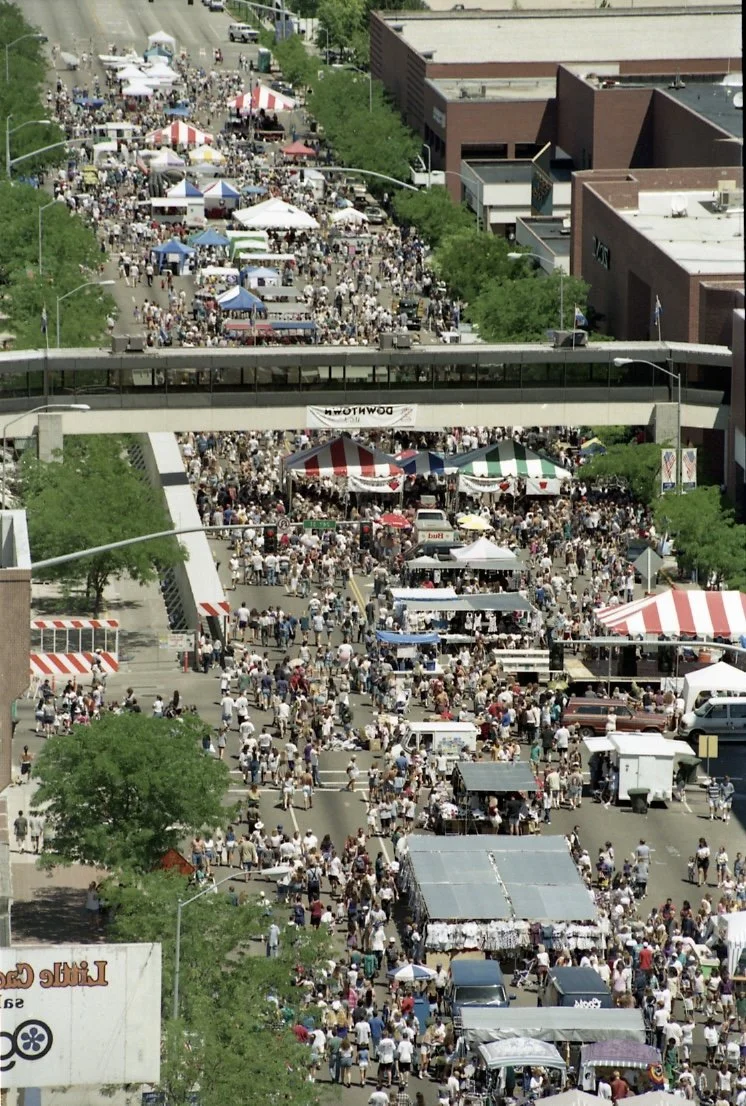
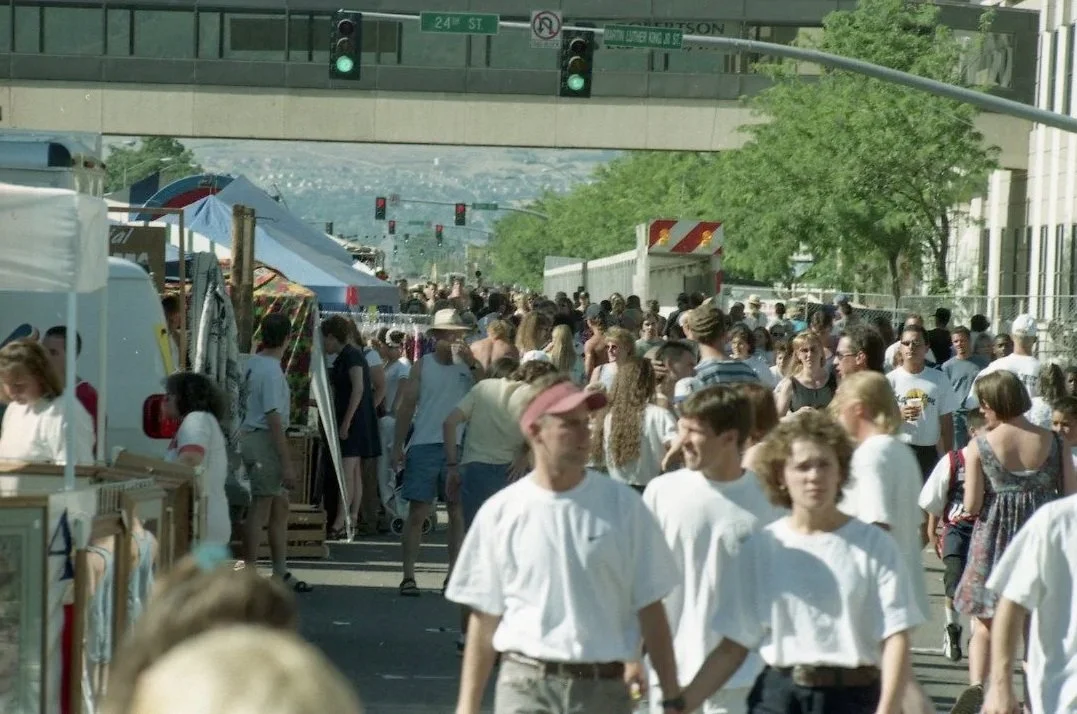
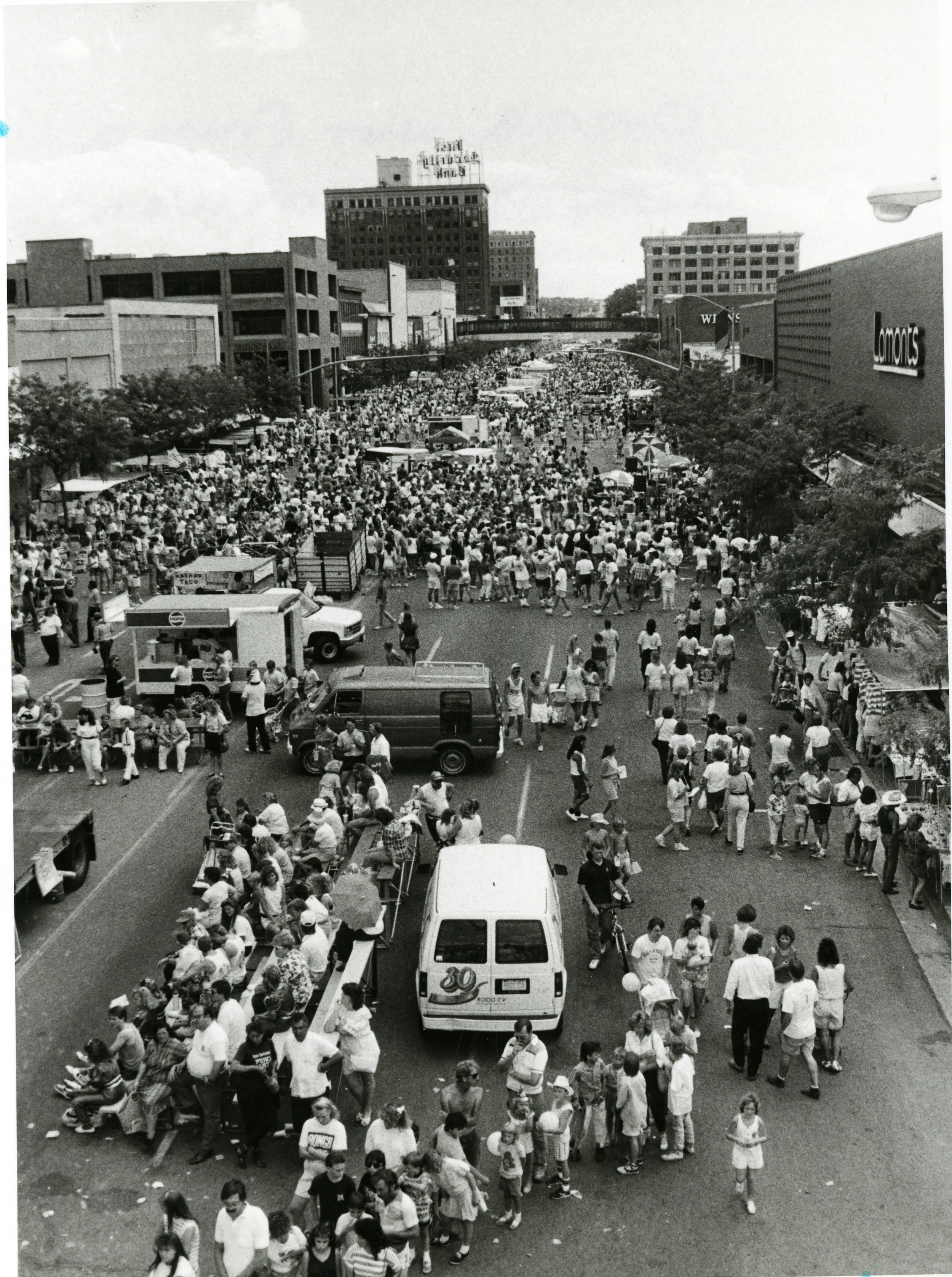
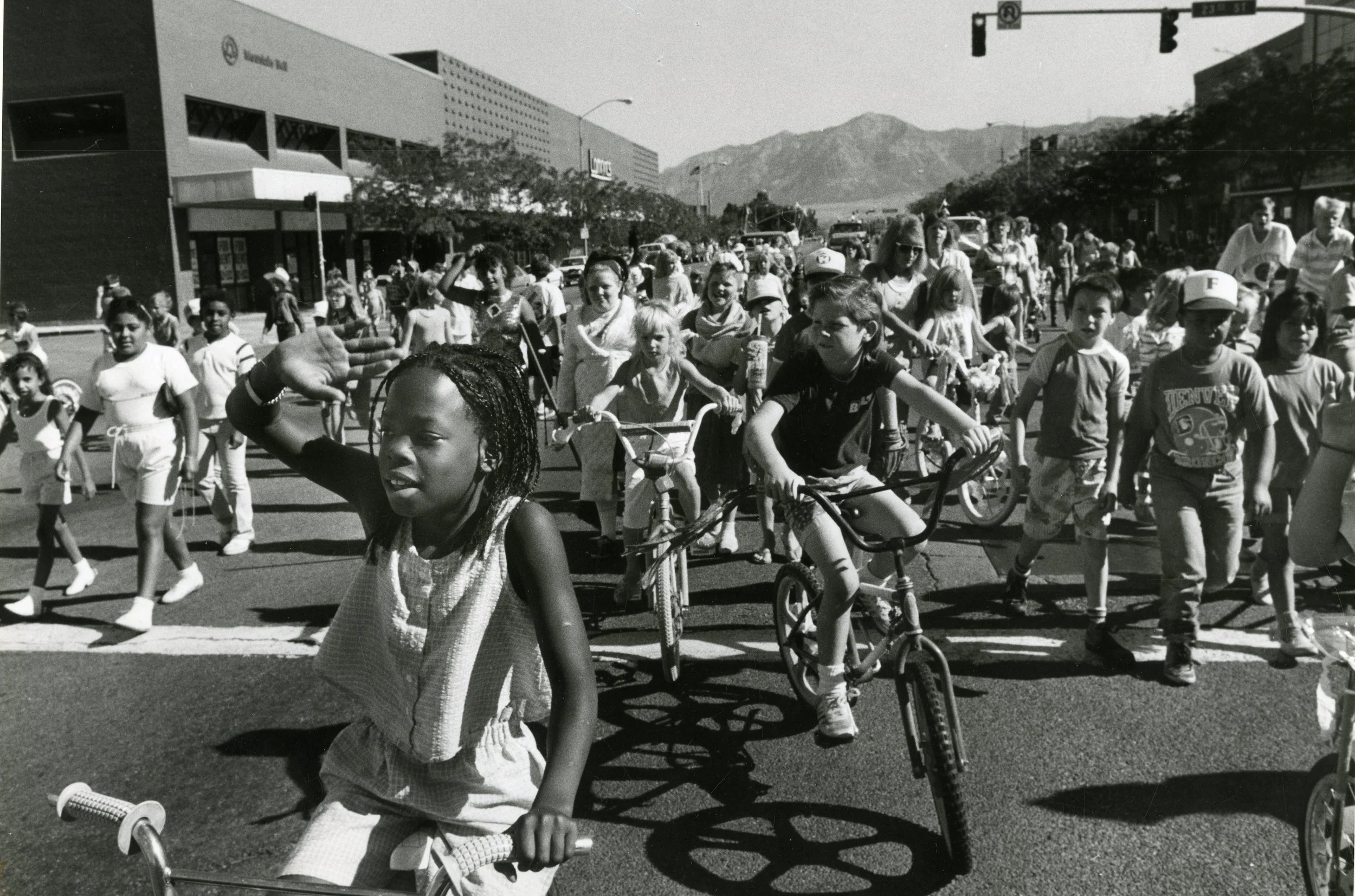
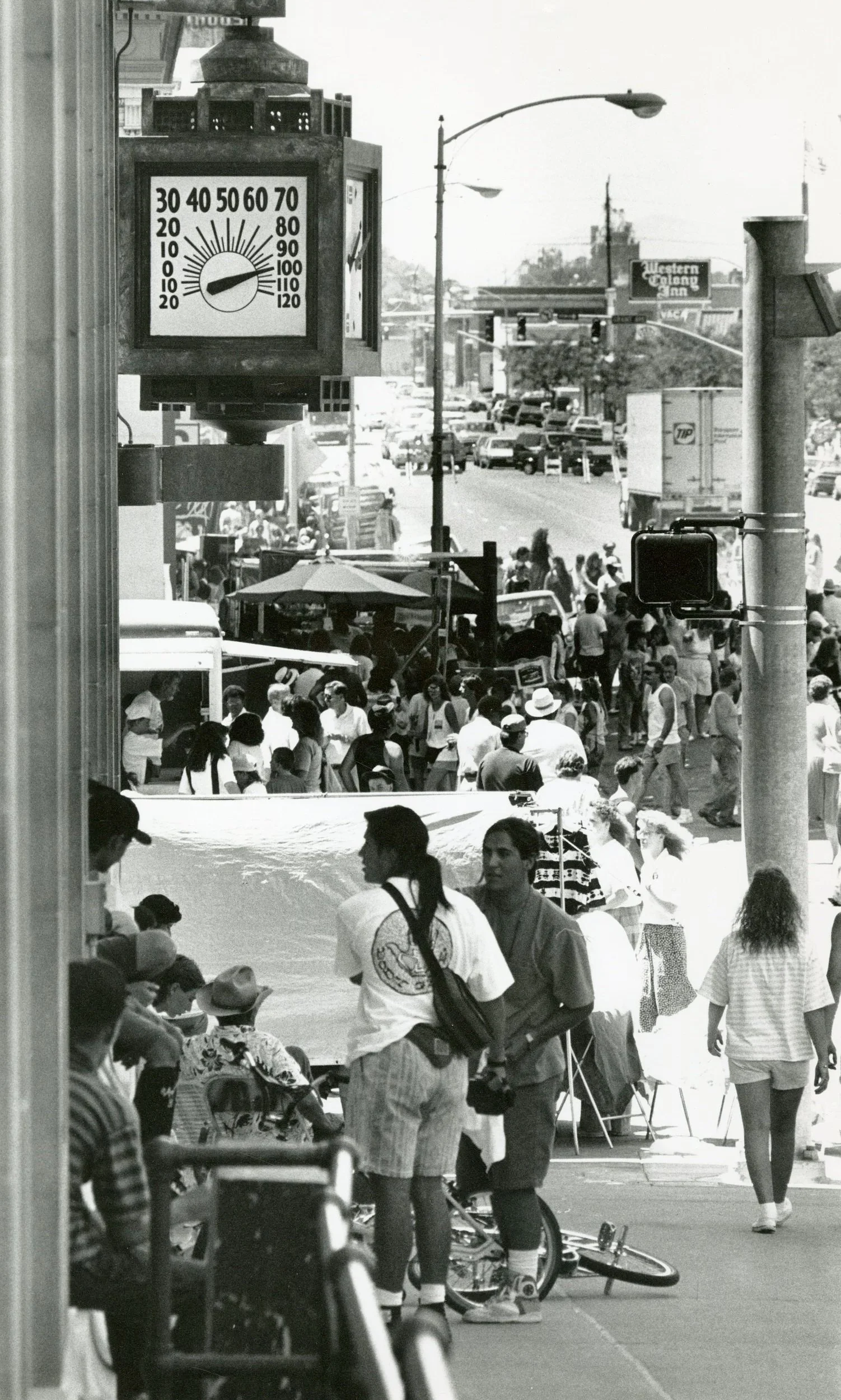
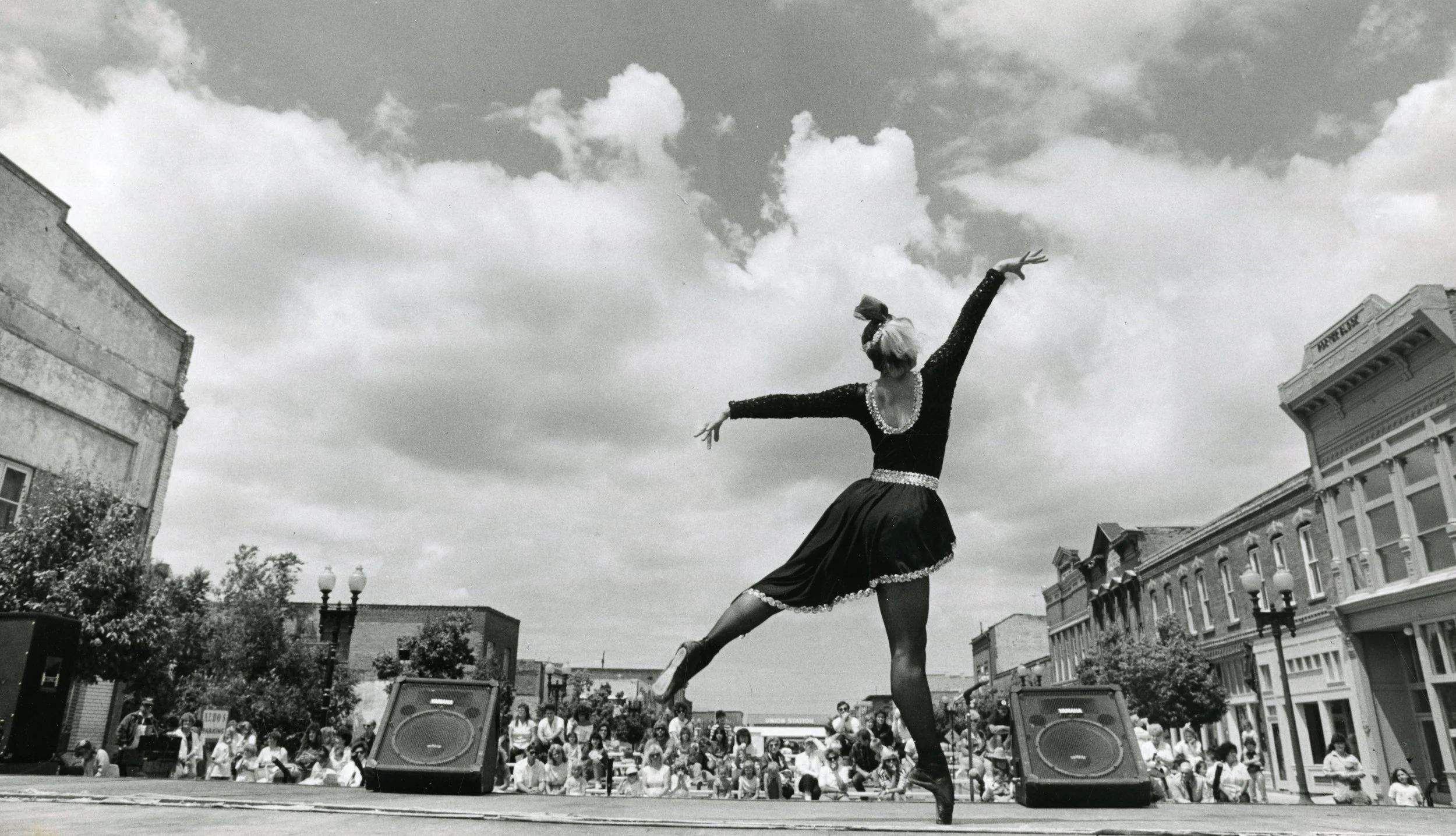
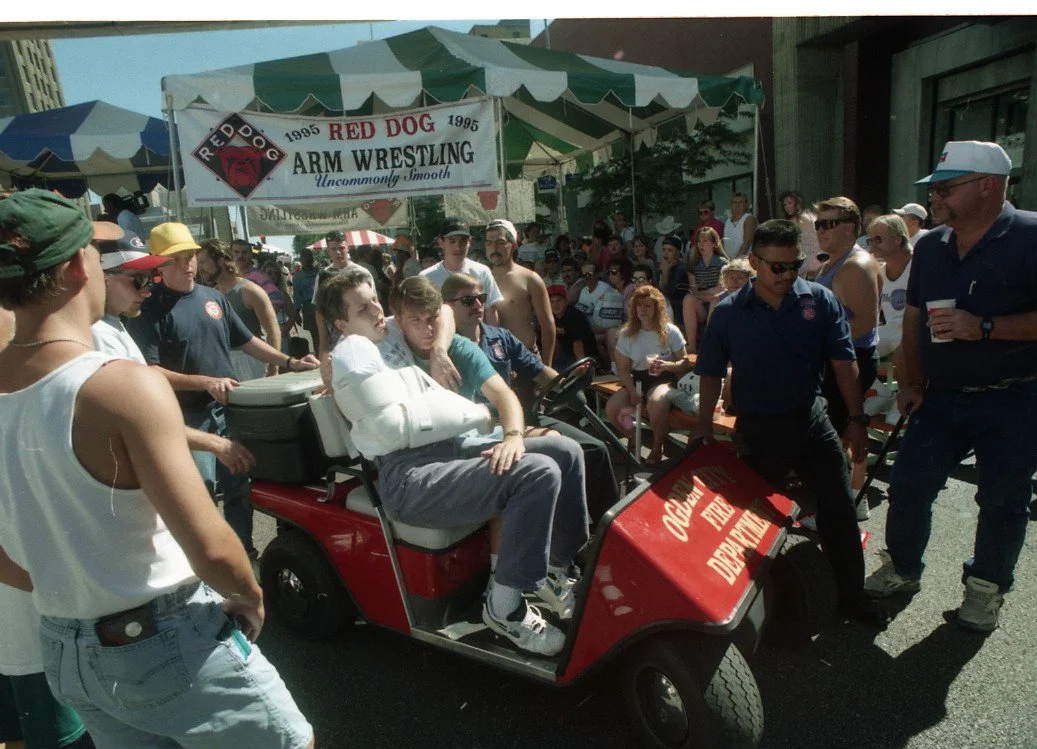
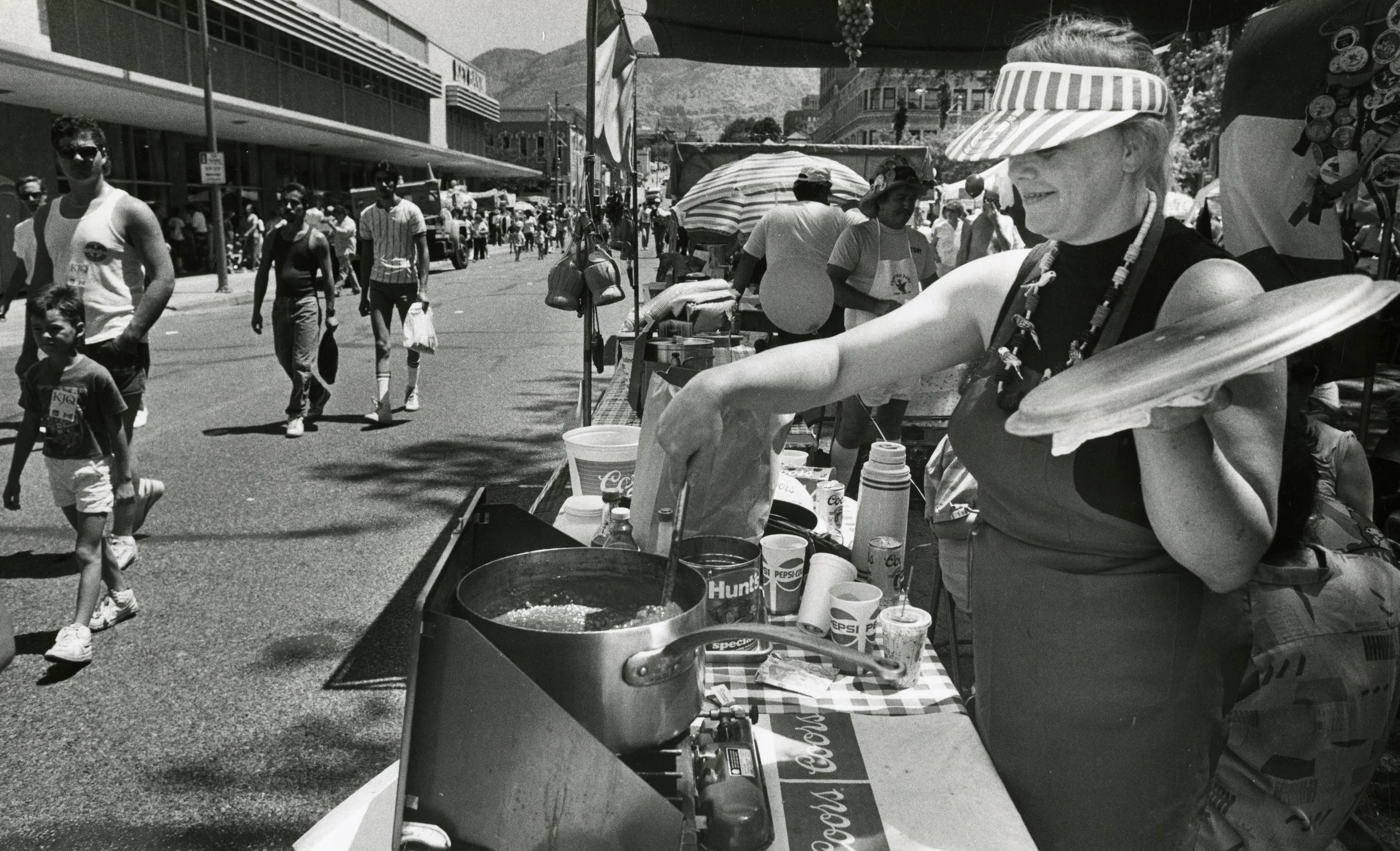
Street Festival, late 1990s.; Attendees at the street festival, ca. 1990s; looking down Washington Blvd during the street festival, ca. 1990s; Children’s parade during the street festival, ca. 1990s; Attendees at the Street Festival, ca. 1990s.; Woman performing on the 25th Street stage, ca. 1990s; Arm wrestler injured during the competition, 1995; woman serving food during the Ogden Street Festival, ca. 1990s. WSU Special Collections and University Archives
For more than two decades, the Ogden Street Festival transformed downtown Ogden into one of Utah’s busiest destinations for a day of summer entertainment, shopping and community activities. What began as a simple downtown clearance sale eventually grew into one of the state’s largest single-day events, drawing tens of thousands of visitors before the city ultimately canceled it in 2003.
The festival’s roots date to the 1960s, when downtown businesses held an informal summer clearance sale. In 1976, city leaders formally organized the event as part of the week leading up to Pioneer Days. The festival occupied several blocks of downtown, stretching along Washington Boulevard from 22nd to 26th streets, with activities extending along 24th and 25th streets toward Wall Avenue and into the Municipal Gardens.
The free event quickly became a major attraction. By the 1990s, attendance regularly reached 60,000 to 85,000 people. The 1992 festival, for example, drew more than 60,000 visitors and attracted vendors from Colorado, Arizona, Idaho and across Utah. In 1997, attendance reached about 85,000 despite a rainy start. Two years later, more than 65,000 people attended the 24th annual festival, making it northern Utah’s most-attended single-day event.
The festival offered something for nearly everyone. More than 300 vendors filled the streets as part of what was essentially a giant summer sidewalk sale. Music and entertainment stages, rides, games, clowns and face painting entertained families, while competitive events added a more unusual side to the celebration. Visitors could watch or participate in 3-on-3 basketball, arm wrestling, horseshoes, handcar racing and the popular snowmobile "Asphalt Drags." The 1999 festival even featured monster trucks that transformed into robots, while venues connected to the Salt Lake Olympic Committee promoted bobsled, luge and speed skating.
The event also served a civic purpose. Registration fees from vendors were used to support improvements to downtown Ogden, and local charities became an important part of the festival. In 1991, about two dozen charities raised money at the event. Organizers promoted the festival as a way to bring people downtown and show visitors what Ogden had to offer.
But as the festival grew, so did its problems. Alcohol became an increasingly controversial part of the event. Before beer gardens were introduced, open drinking took place along the streets. Business owners and city officials complained about drunken behavior, littering, public urination and other nuisances. Some travelers reportedly called ahead simply to find out when the festival was taking place so they could avoid the area.
Security also became a growing concern. In 1995, organizers expected about 60,000 attendees and struggled to find enough officers to patrol the festival. The previous year, reserve officers had logged 333 hours and made five arrests. Beer sales generated about $35,000, illustrating the complicated relationship between the event’s popularity, alcohol sales and the concerns of residents and businesses.
The most alarming incident came in 1993, when an unsigned note left at the Ogden IRS center claimed that gang members from California were coming to the festival for an initiation rite that would involve killing 25 people. Police responded with a heavy presence, but the threat proved unfounded and no violence occurred.
By the late 1990s, city leaders were openly debating the festival’s future. Some business owners argued that the event no longer benefited downtown merchants and had become a liability for Ogden’s image. Although the city calculated that tens of thousands of visitors attended each year, one 1999 analysis estimated that downtown businesses received only about 11 cents in revenue per festival patron.
Others defended the tradition. The City Council voted unanimously in 1999 to keep the festival, rejecting a less-raucous replacement. Supporters argued that beer, music and the relaxed atmosphere were essential parts of the event. At the same time, proposals were made to establish beer gardens or eliminate alcohol sales altogether in an effort to reduce problems.
Eventually, the festival’s challenges outweighed its benefits. By 2003, city officials concluded that the event was no longer profitable for downtown businesses and canceled it. An attempted successor, Ogden Summerfest, was designed to be more family-friendly, with changes that included beer gardens and the elimination of events such as Battle of the Bands, arm wrestling and the mechanical bull.
The Ogden Street Festival left behind a complicated legacy. It began as a way for downtown businesses to clear out summer merchandise and grew into a massive community celebration that brought tens of thousands of people to Ogden each year. For a time, it showcased the city through shopping, entertainment, competition and charitable fundraising. But the same popularity that made the festival successful also created challenges involving alcohol, security, litter, and public behavior.
In the end, the Ogden Street Festival became a reflection of a changing downtown: a beloved summer tradition for many, but an increasingly difficult event for the businesses and city leaders responsible for keeping downtown safe, welcoming and economically healthy.