

Public outcry fails to halt data center
NEWS
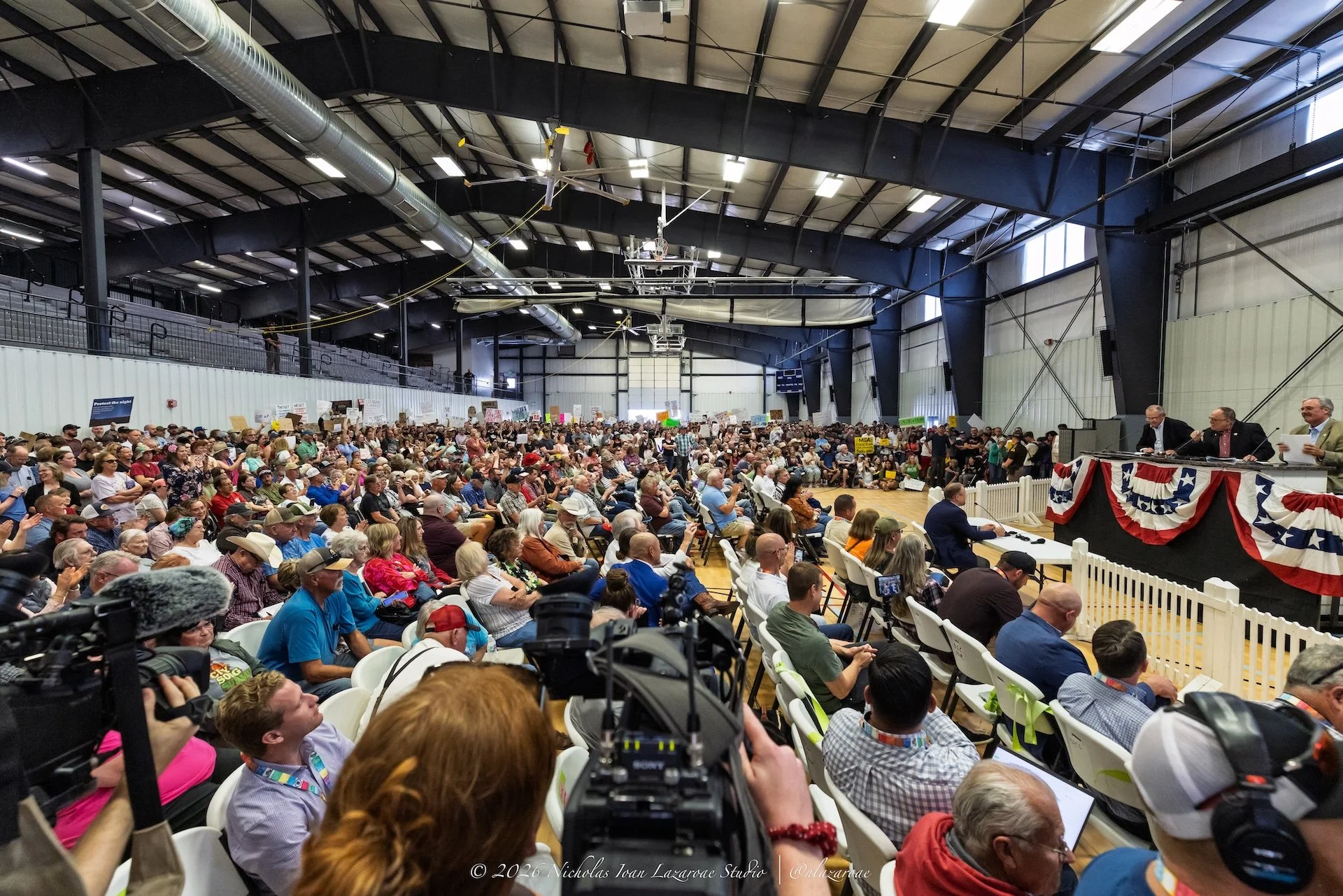
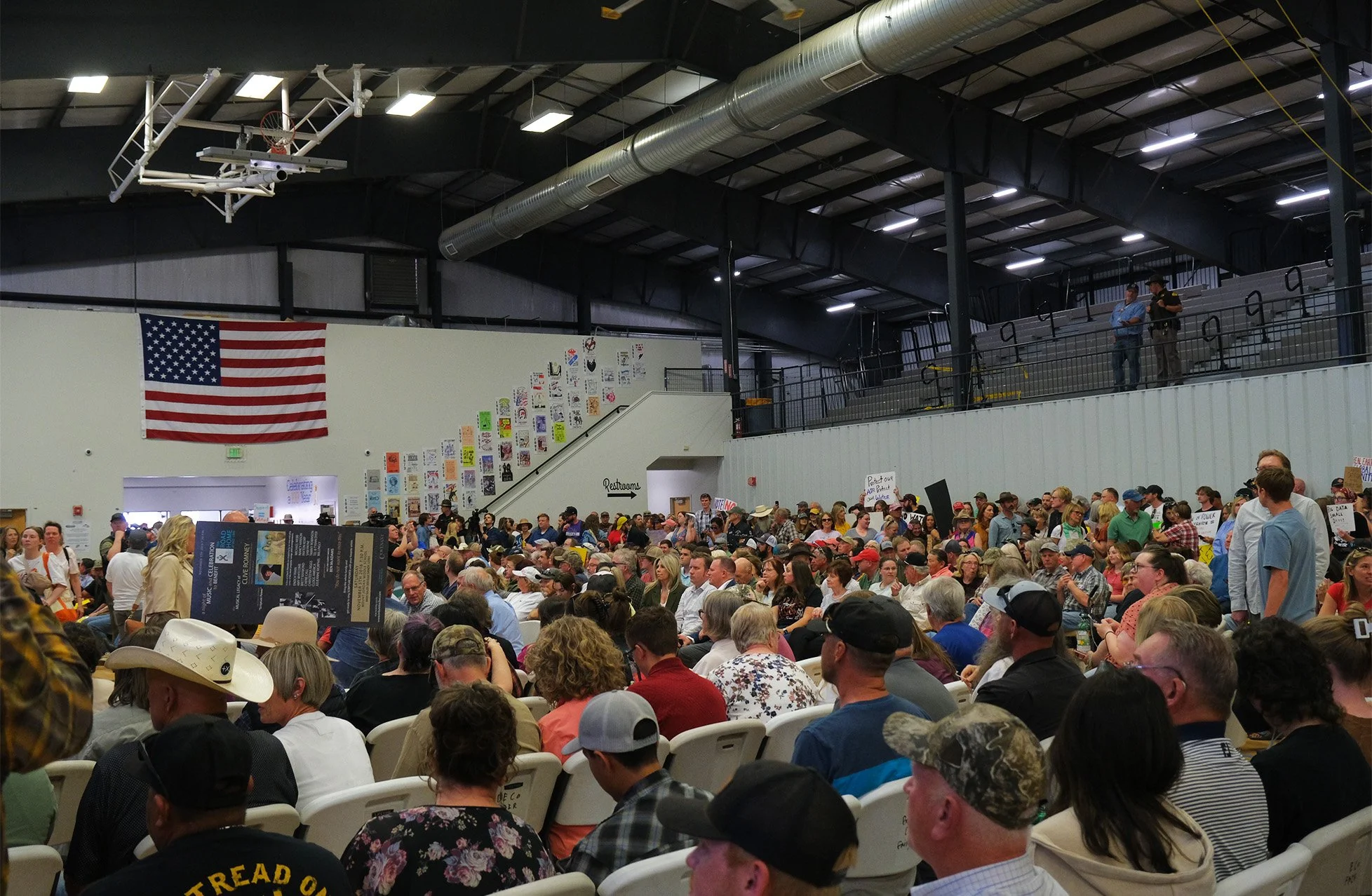
Packed meeting room in Tremonton on Monday, May 4, ahead of Box Elder county commissioners’ decision on the data center project. | Nicohlas Ioan Lazaroae Studio
Box Elder County commissioners walked out of a packed meeting room as hundreds of attendees shouted in protest before voting behind closed doors, advancing a controversial data center project.
The three-member county commission unanimously approved the proposal, which could require nearly twice the amount of power currently used across Utah.
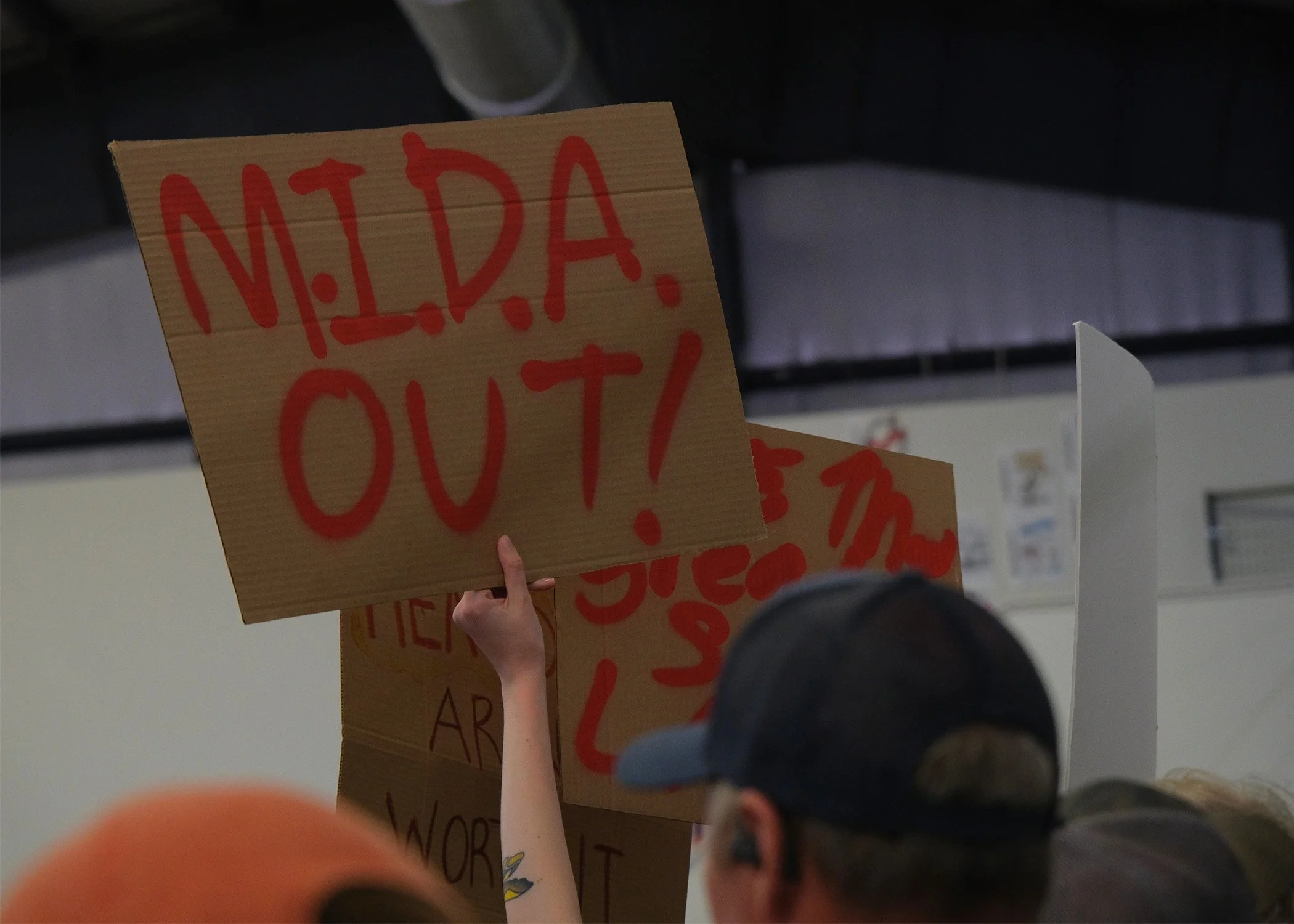
The center is backed by Utah’s Military Installation Development Authority (MIDA), a state government entity created to manage and develop land around military installations, along with celebrity investor Kevin O’Leary.
After delaying the decision a week, Box Elder held a deciding vote on Monday afternoon at the Box Elder County fairgrounds in Tremonton, to decide the approval behind the construction of a massive data center, nicknamed the Stratos Project.
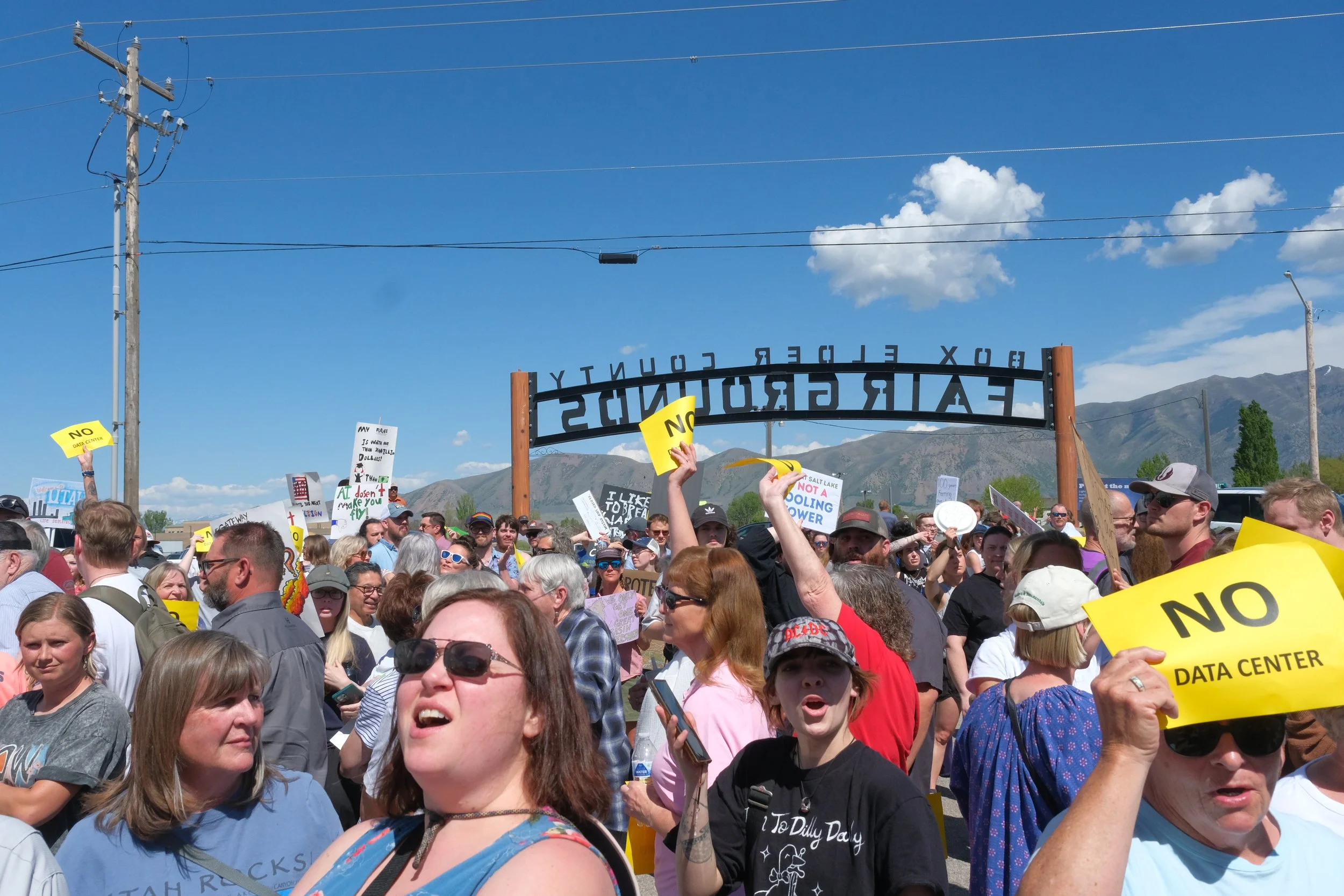
Hundreds gathered at the fairgrounds ahead of the meeting, holding signs opposing the project as community members addressed the crowd.
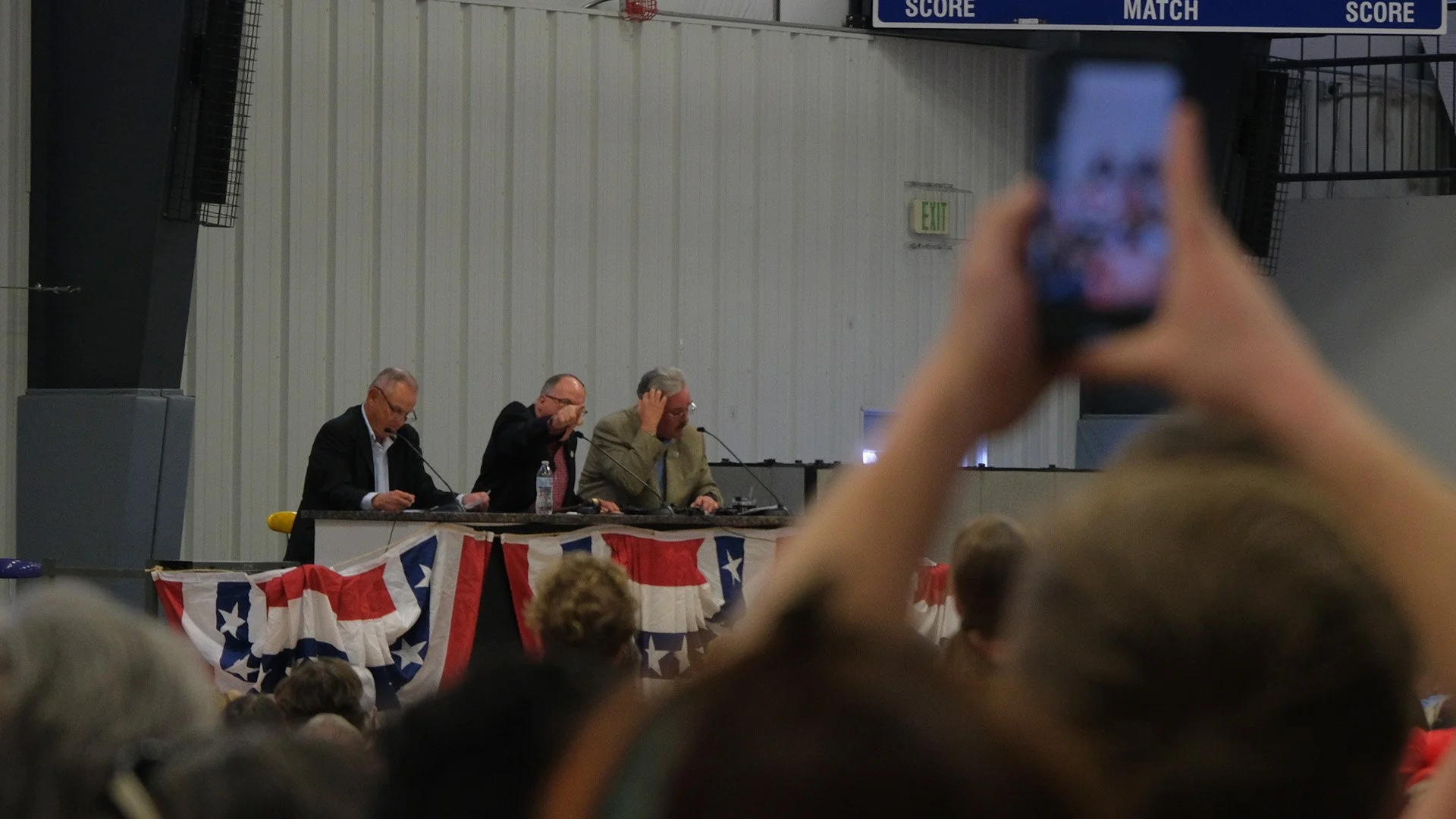
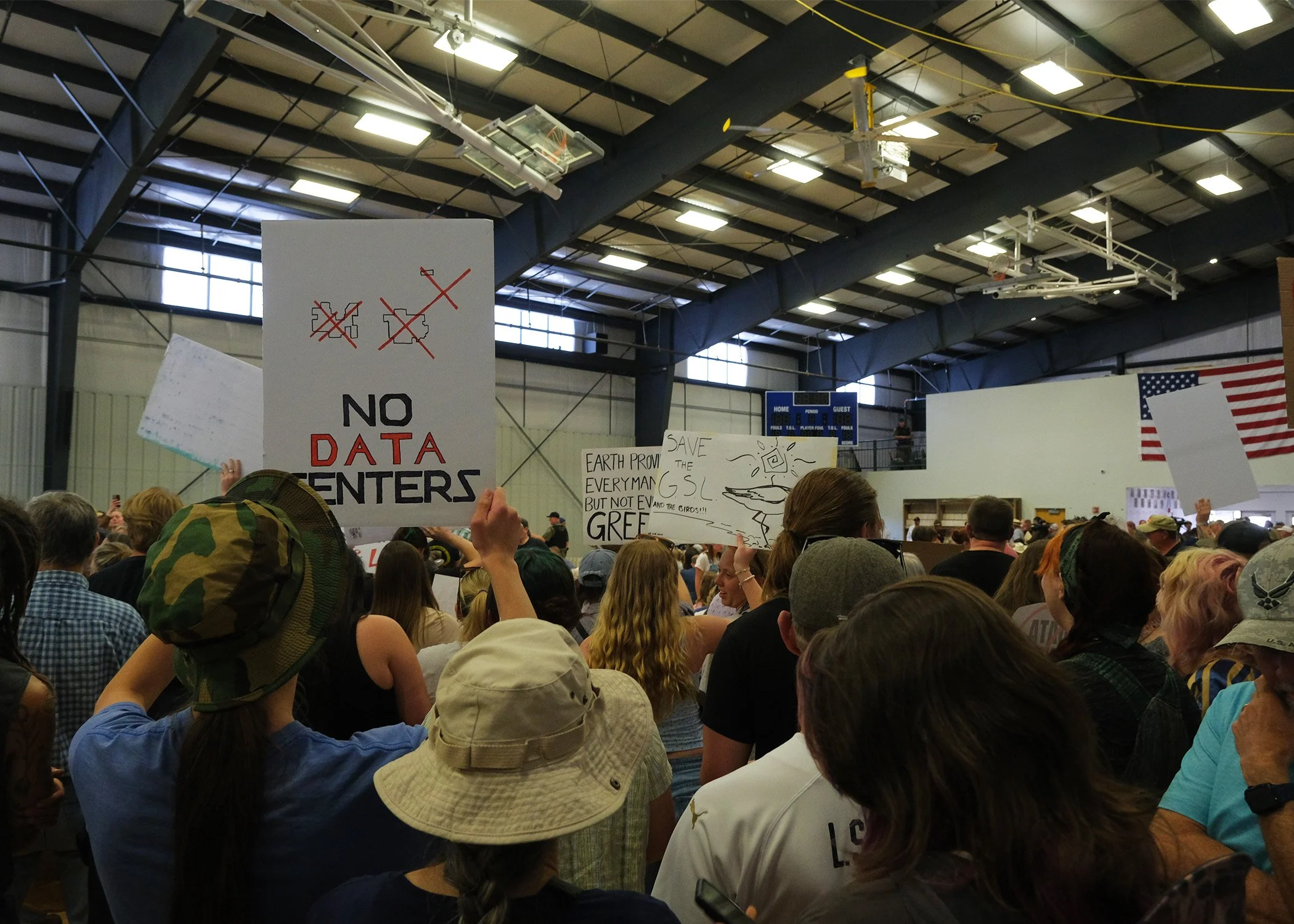
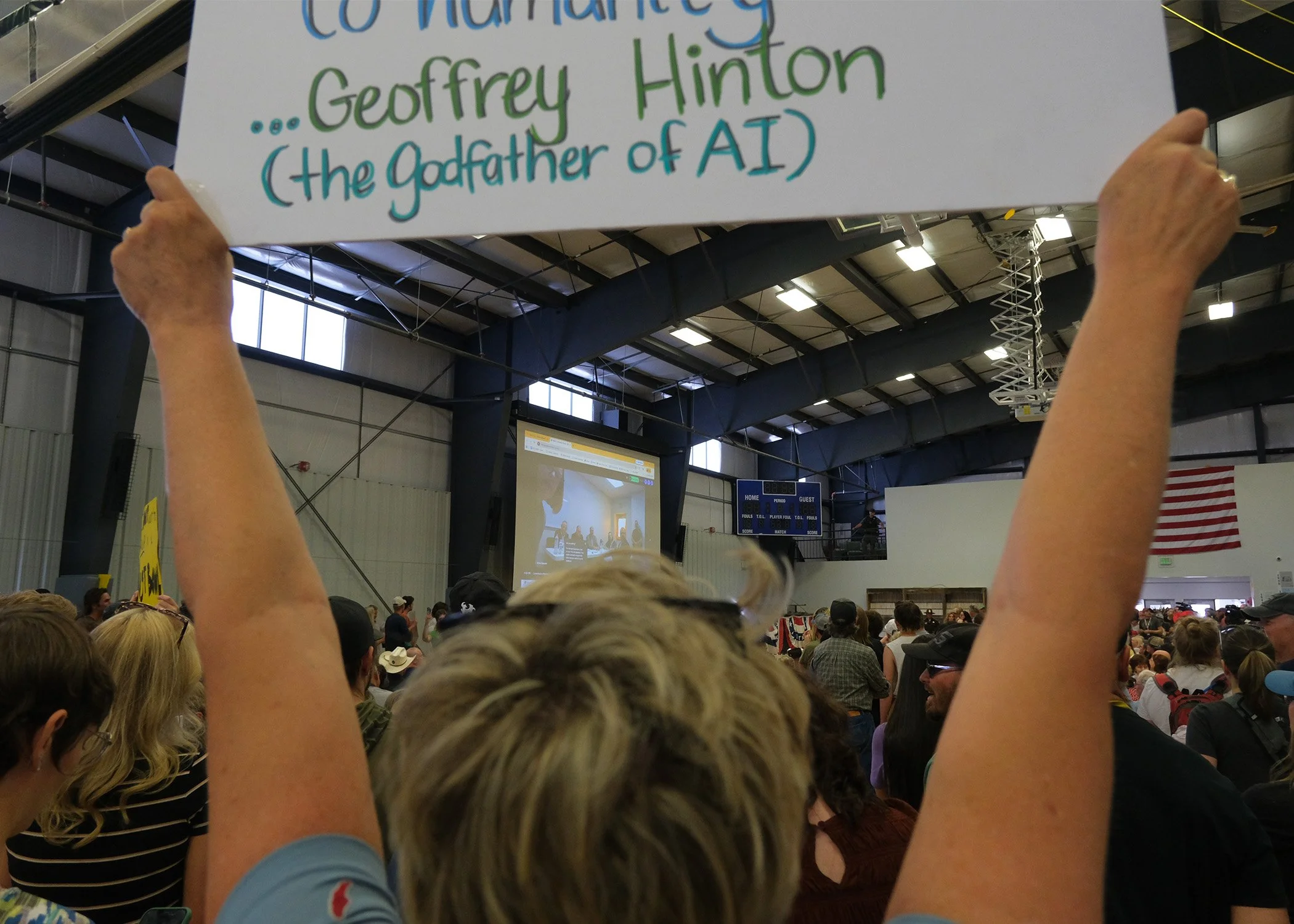
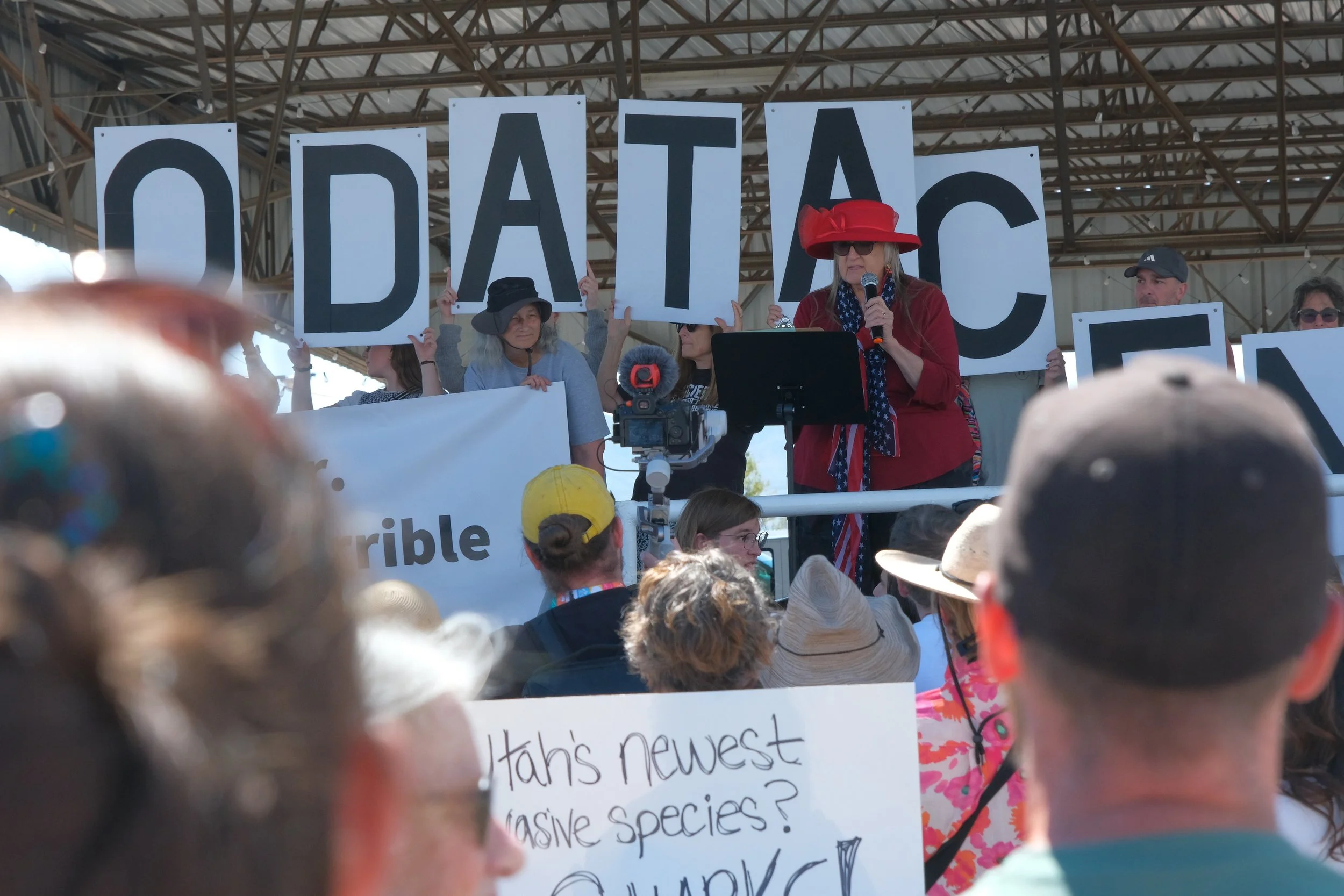
Photos : James Gordon
1. Commissioner Tyler Vincint shouts back to a rowdy crowd moments after Commissioner Boyd Bingham told attendees to “grow up.”
2. A crowd chants “People over profit,” as the Box Elder County Commissioners walk off the stage.
3. An attendee holds a sign as Box Elder County commissioners prepare a vote via video call.
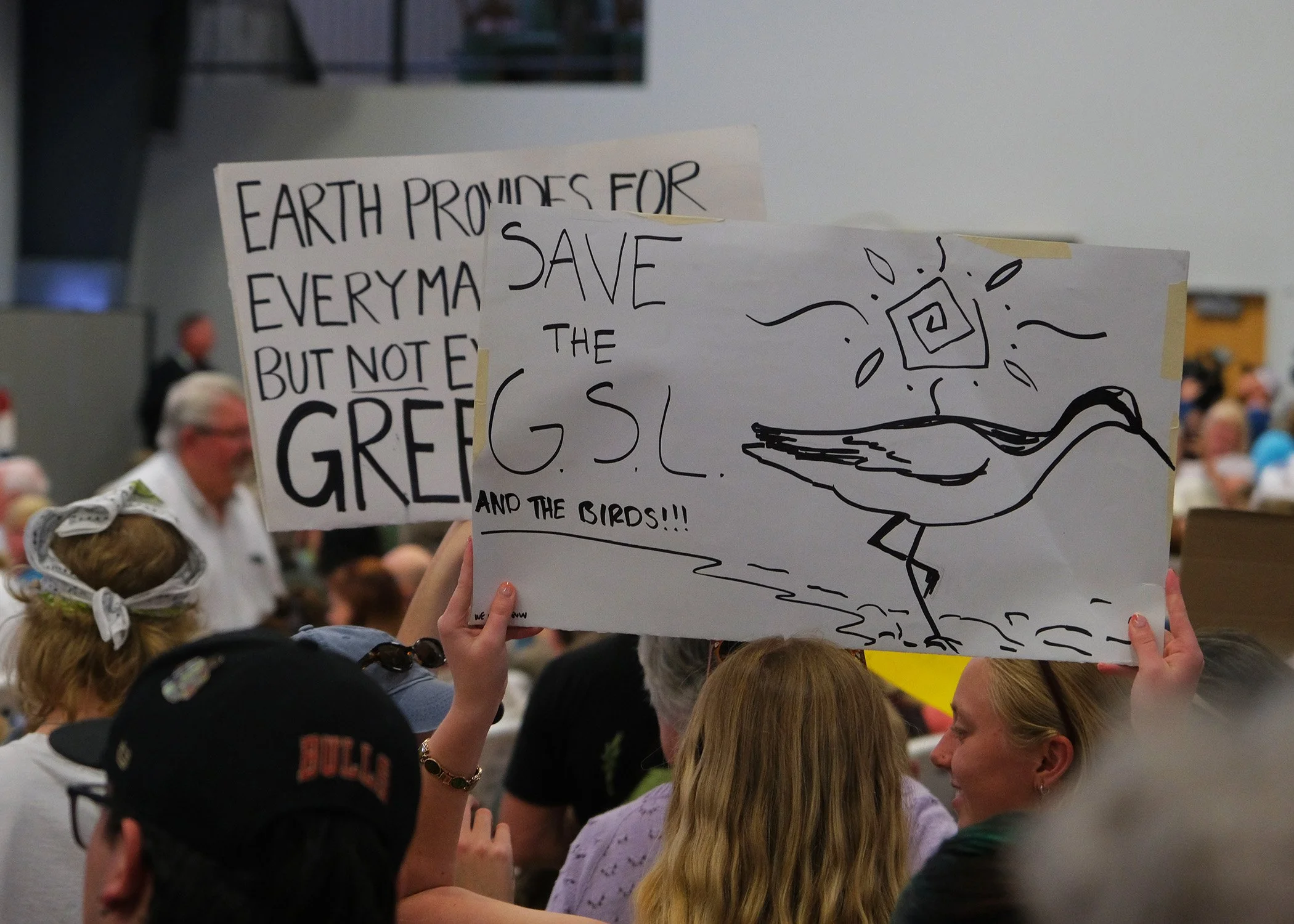
4. Protesters clutch signs calling to save the Great Salt Lake, a primary concern among attendees at the Box Elder County meeting on May 4.
5. An attendee holds up a sign reading “M.I.D.A. OUT!” In protest of the Military Installment Development Authority and its role in the Stratos project.
6. A packed room watches a screen as the Box Elder County commissioners vote to advance the Stratos project.
7. A crowd gathers outside the Box Elder County Fairgrounds as speakers address a rally before the meeting on May 4.
8. Speakers address a crowd at a rally outside the Box Elder County Fairgrounds before entering the building on May 4.
Around 4 p.m., attendees lined up outside the building, with Box Elder residents admitted first, followed by people from neighboring counties.
The crowd quickly filled the room, waiting as commissioners took their seats at the front of the room behind a podium.
After introductory remarks, Commissioner Tyler Vincent opened the meeting stating, “As last Monday, there will be no public comment, period.”
The commissioner's announcement was met with immediate outcry, a consistent theme throughout the meeting.
Vincent called for order and asked the crowd not to shout, catcall or disrupt proceedings. As the noise persisted, he warned that law enforcement would remove disruptive attendees. The crowd did not quiet.
Commissioners addressed concerns raised by residents following last week’s meeting — a meeting that sparked the delayed vote and change in venue. As officials, commissioners and their panel continued, they battled continuous outbursts from the crowd.
Roughly 30 minutes into the meeting, tensions escalated. “For hell’s sake, grow up,” Commissioner Boyd Bingham shouted.
His remark drew boos, and outbursts evolved into a unified chant of “people over profit.”
Shortly after, commissioners stood and left the podium for a separate room, where they made their decision behind closed doors.
For nearly 20 minutes, the commissioners’ team worked to set up projectors in the main room, continuing their announcements and final vote over a video call.
As attendees watched, commissioners unanimously approved two resolutions: 26-12, allowing an agreement between Box Elder County and MIDA, and Resolution 26-11, permitting the agency to move forward with the project.
“This has not been a simple decision,” Commissioner Lee Perry said. “Over the past several weeks, we have taken time to do our due diligence, meet with stakeholders, and most importantly, gather input from our community.”
Perry added that they gathered community input transparently by creating a project information page on the county website, opening a public feedback forum and reviewing more than 2,500 comments.
“Those comments reflected a wide range of perspectives; some supporting, and others opposing the project,” Perry said. “We considered all of them in our decision-making process. I want to make it clear today: today’s vote is not the end of the process, it is the beginning.”
Perry explained if the project moves forward, it will happen in a series of phases over multiple years, with each step requiring oversight, permitting and regulatory review. He added town halls will be arranged in the future to answer residents’ questions.
Casey Hill, a spokesperson for O’Leary Digital, said the first phase is expected to begin in the next few months and is expected to cost more than $1 billion.
The first phase of the project is projected to require 3 gigawatts of power. Developers have said the project could require up to 9 gigawatts of energy, more than double Utah’s average power, raising questions about how that energy would be generated and delivered.
The proposed 40,000 acre site is more than twice the size of Ogden, which spans about 17,600 acres, marking a project of unprecedented scale.
County commissioners stressed the campus would be required to generate its own energy; some reports have indicated MIDA could rely on natural gas delivered through the Ruby Pipeline, a 680-mile pipeline that crosses northern Utah from Wyoming into Oregon.
Concerns over the project’s energy demands have also focused on natural gas infrastructure, with residents questioning whether existing pipelines could support development and what impact increased usage could have on air quality and surrounding communities.
Beyond energy needs, residents have also raised concerns about how much water a project of this size would require. Throughout the meeting, attendees protested water vulnerability in the area, and held signs calling to save the Great Salt Lake.
Perry said the vote had nothing to do with water or air quality, adding that those issues are handled at the state level and that water rights are controlled by landowners.
Gov. Spencer Cox defended data centers in the days leading up to the meeting, citing national security and the growing demand for artificial intelligence infrastructure.
“We have an obligation, I think every state has an obligation, when it comes to this space to allow for these types of data centers to be built in their states,” Cox told reporters Thursday. He was not in attendance at the meeting.
But some residents said those priorities come at a cost, questioning both the decision-making process and the agencies responsible for regulating the project.
“They’re selling themselves to big, giant contracts, and ourselves and future generations and the ecological system are all greatly at risk right now,” said Garrett Riley, a Salt Lake City resident who traveled to attend the meeting. “They didn’t make room for any public comment. All of their arguments are very one-sided, and we’ve also seen it’s been difficult to trust the agencies that are supposed to reassure us.”
Riley added that he believes the long-term environmental impact could be severe.
“If this ends up going through,” he said, “I think that Utah is going to be uninhabitable.”