

Ogden Pioneer Days
A Depression-era gamble that became a tradition – and survived for almost a century
By Sarah Langsdon
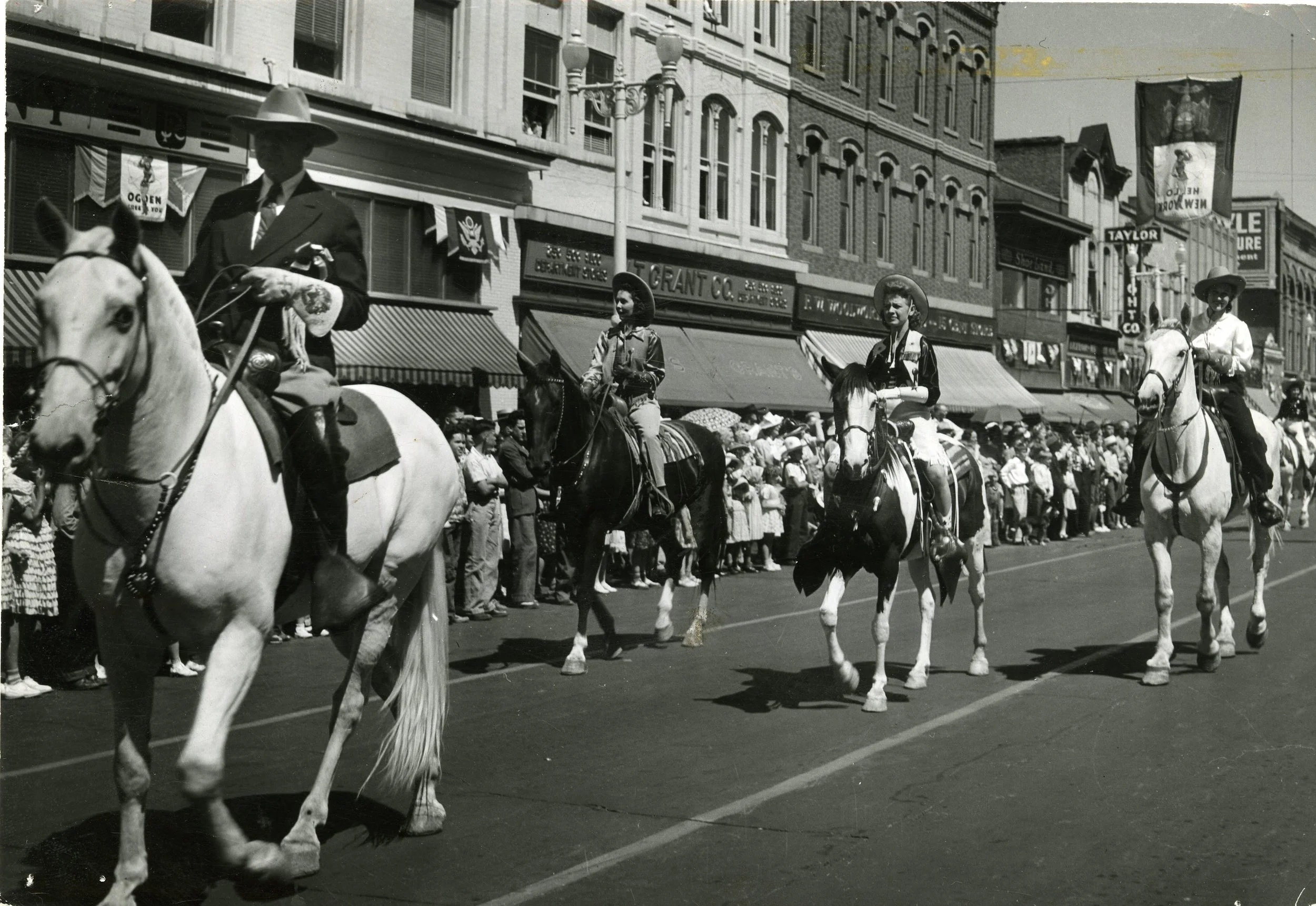
Pioneer Days Parade, ca. 1940s. Photo courtesy of Special Collections and University Archives
By the spring of 1934, Ogden was struggling through the depths of the Great Depression. Businesses were searching for customers, unemployment remained high, and communities across the nation were looking for ways to boost local economies. Newly elected Mayor Harmon W. Peery believed he had an answer: a grand Pioneer Days celebration centered around a professional rodeo.
Planning began in April 1934 with an ambitious goal — to attract visitors to Ogden, encourage spending at local businesses, and showcase the city as the center of Utah’s Pioneer Day festivities.
Organizers understood that families had limited money to spend. To maximize participation, most events were free or modestly priced. Rodeo tickets sold for just 50 cents and were available through local merchants. Mayor Peery was so confident in the event’s success that he predicted every participating merchant would sell at least $100 worth of tickets.
The celebration was designed as a citywide spectacle. Official colors of sage green, sunflower gold, and a brick hue they called “Indian” red decorated streets and storefronts. A truck equipped with a radio and loudspeaker traveled throughout the region advertising the festivities, while two drum corps and a 50-piece military band helped generate excitement.
The opening event was a five-episode historical pageant, Like a Fire Is Burning, sponsored by the Weber County Daughters of Utah Pioneers and staged at Ogden Stadium. The following morning, the formal opening of Pioneer Days was announced with shrieking whistles and sirens from factories and railroad yards across the city. Between 15 and 22 airplanes flew overhead in formation, performing what newspapers described as a free "air circus."
Parades became one of the celebration’s highlights. Railroads entered elaborate floats depicting the driving of the Golden Spike, a replica of the famous locomotive Jupiter, and pioneer prairie schooners. Historical figures such as mountain man Jim Bridger were portrayed by costumed participants, while a fashion competition rewarded the best Pioneer Days attire.
The centerpiece of the celebration, however, was the rodeo.
Performers arrived in Ogden with horses, long-horned Texas steers, Scotch Highland cattle, and even buffalo. Rodeo officials proudly proclaimed their slogan: “120 events in 120 minutes.” The specially designed chutes were described as the finest rodeo setup many performers had ever seen, allowing animals to be released instantly as events progressed.
Crowds packed the 10,000-seat Ogden Stadium for all three rodeo performances. Thousands more lined fences and searched for vantage points to catch a glimpse of the action. The event proved so popular that it exceeded expectations despite the difficult economic times.
The road to success was not without challenges. Organizers worried that fireworks ordered for the celebration might never arrive due to labor unrest and a dock blockade in San Francisco. The fireworks sat trapped in waterfront warehouses while striking workers prevented shipments from reaching railroad terminals. Mayor Peery reportedly “kept the wires hot” between Ogden and California until the fireworks finally arrived just days before the celebration and were stored safely at the city fire station.
The success of the 1934 celebration sparked a new debate later that year. Officials from Salt Lake City suggested that the two cities alternate Pioneer Day celebrations. Mayor Peery strongly rejected the proposal. Noting that Salt Lake City had abandoned its own Covered Wagon Days celebration after financial losses, Peery declared that Ogden would continue hosting Pioneer Days indefinitely.
“There will never be a last round-up for Ogden’s Pioneer Days celebration,” he stated.
The mayor’s prediction proved correct.
The following year, Marilyn Eccles was selected to reign as Pioneer Days Queen. In 1936, Mayor Peery chose Lorene Donaldson after seeing her ride horseback. Dressed in western costume, her photograph was distributed to more than 1,400 newspapers across the country. Her image soon became synonymous with Ogden Pioneer Days and helped establish the celebration’s national reputation.
What began as a Depression-era effort to stimulate tourism and support local businesses evolved into one of Utah’s most enduring traditions. Today, Ogden Pioneer Days attracts more than 30,000 (now the foundation says it draws 50,000) rodeo attendees annually, continuing a legacy that began with one mayor’s determination to bring hope, excitement, and economic opportunity to a struggling city.
Visit Ogden Pioneer Days website for the full schedule of events — rodeos, parades, and more — this month.
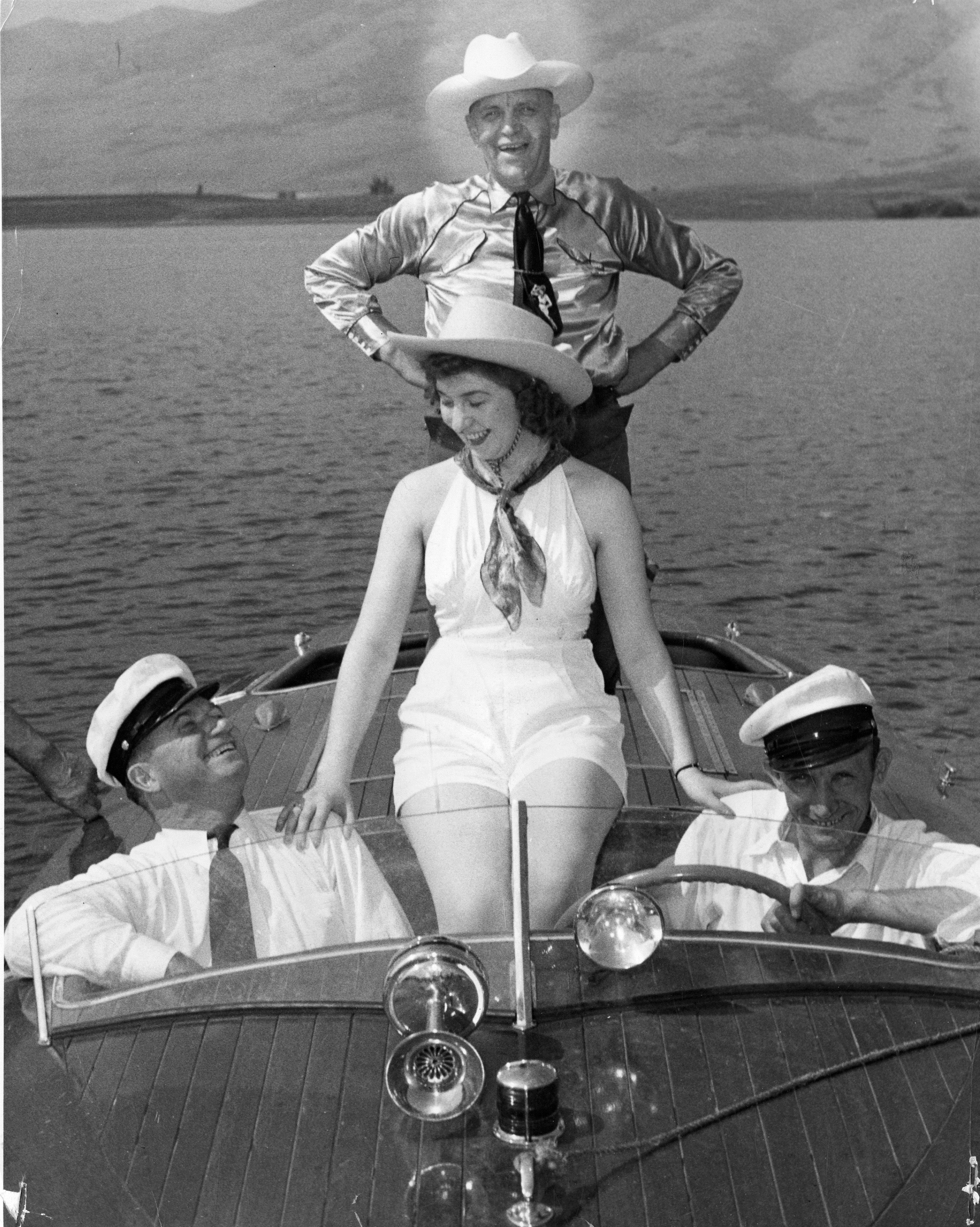
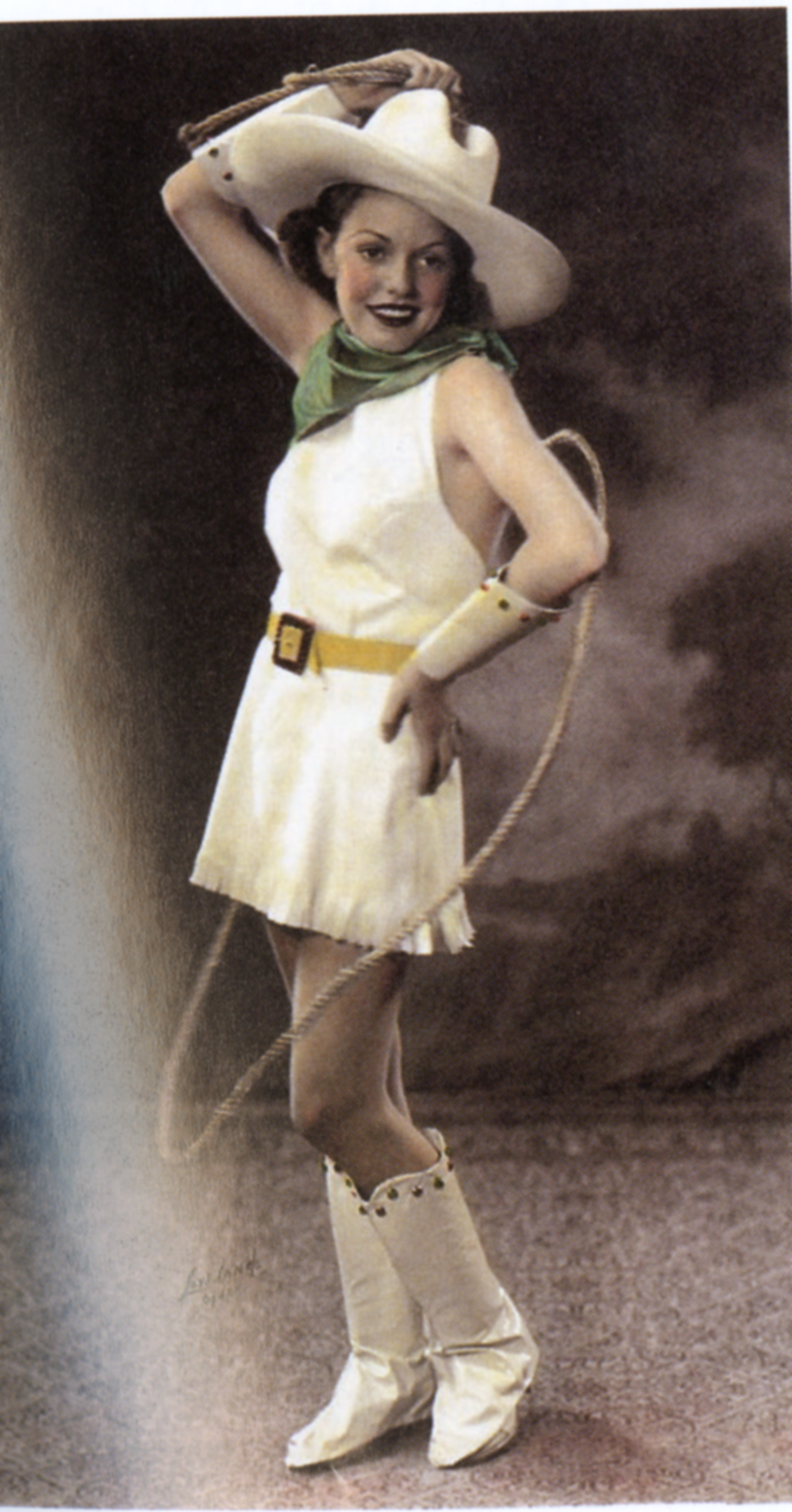
Harman Peery (standing) and a Whoopie Girl, ca. 1940s. Photo courtesy of Special Collections and University Archives