

Review: 'Spring Awakening'
A raw portrayal of society's systemic abuse of youth, Wedekind's often-banned masterpiece remains tragically relevant
Oct. 2-10, 7:30 p.m.
ASL: Oct. 8, 7 p.m.
Directed by Andrew Barrratt Lewis
WSU Eccles Theater
Weber.edu
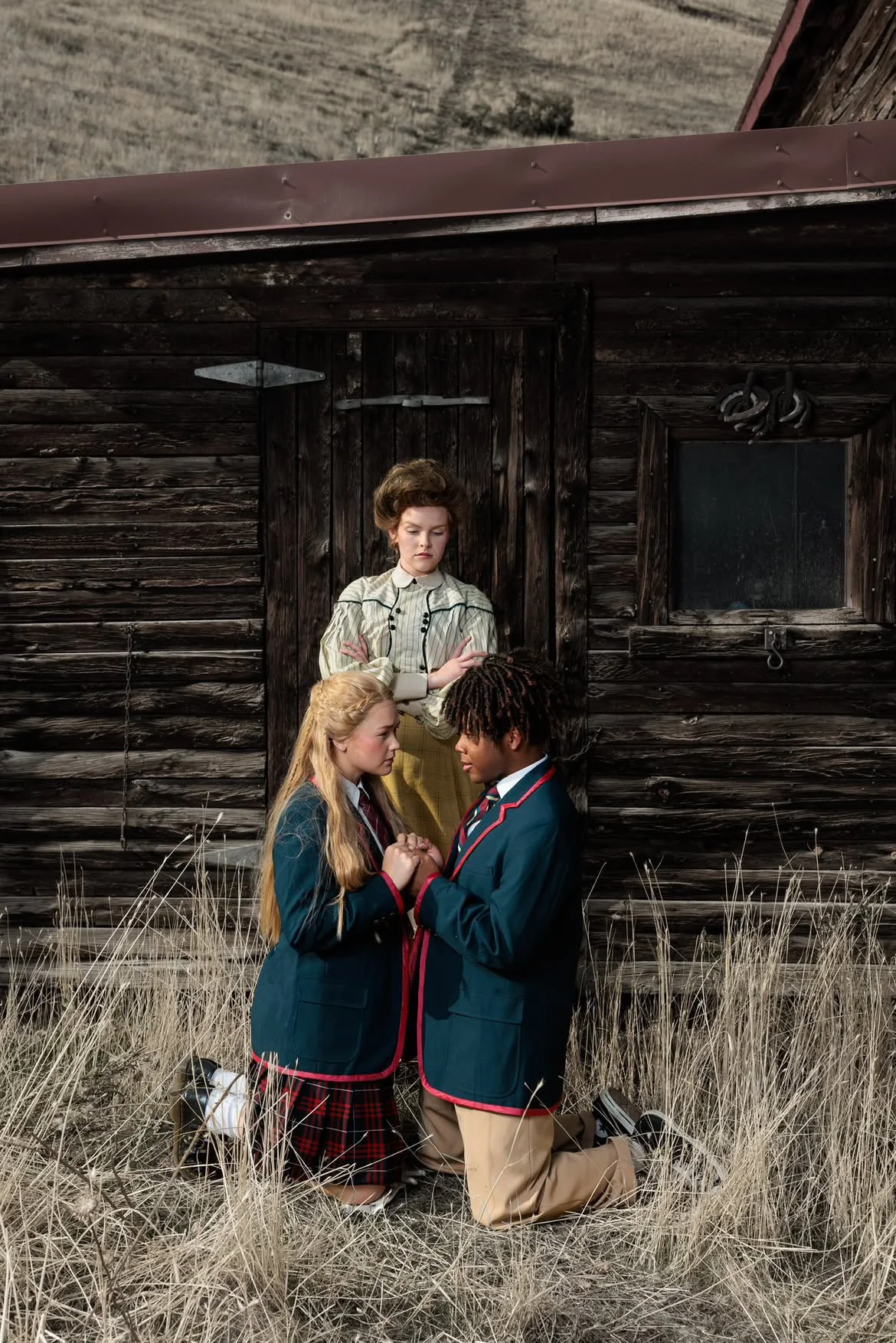
“Spring Awakening” press photo. David Daniels
Frank Wedekind wrote a play in 1891 that changed the direction of modern theatre. With an expressionistic style, his four main characters, all 14 years old, are shown as a kaleidoscope of abuse that society pounds on children from birth and especially on teenagers.
The innocent girl dies from an abortion because her mother never told her "about that." The hapless boy fails at everything, even when he wins. He dies by suicide. The smart boy who knows it all — he really does — ends up in custody because of illegal speech. The only survivor, the resilient one, is the "bad girl" kicked out on the street after being impregnated by her father. Her baby dies, but she survives to see better days ahead as she survives childhood.
People were outraged at what he said. He was not able to get the play performed for an audience until 1906, and not in English until 1917 in New York, where it was claimed to be pornographic and only allowed to be performed ONE TIME.
Since then, it has been banned on and off through the years and around the world. I know there are people in the grocery store or farmers market next to you who would be outraged, too. Even you might be.
This material is raw and real and as up to date as your last social media news. And tragic. The subtitle of Wedekind’s play is “A Children’s Tragedy.” These kids don’t stand a chance, whether they see it coming or not.
Weber State Theatre’s production of the 2006 musical renovation of this play is inspired, considering I just watched the news about high school students in France bringing their country to a complete standstill. The moment the play turned from a classroom of students beaten down by a cruel, by-the-book schoolmaster, and the moment he left the room, the explosion of the entire theatre was profound. The lighting, the sound, the music, the choreographer and the absolute foot-down moment shook MY feet, and I was sitting in the back row. The power of those young people could hold down the barricades.
Another spectacular moment was the suicide. Rather than gunfire, the black box shook with an incredible thunderbolt that rolled overhead and then faded into the sound of rain. Technical design perfection.
I credit all the actors and their costumes, makeup and hair. They each personified their simple form of childhood. They were all stars, but the lasting star is Bee Higgins as Ilse. (She stole her scenes in "Hairspray" this summer as the spoiled racist.) Here, she tears every tear you have in you for another poor victim of another terrible family. Her optimism transforms the scene of a poetic Blue Wind of her childhood that will turn into a time "when all shall know the wonder. I will sing the song of purple summer."
I thought I was going to be old, with compassion for the children’s stories. Instead, I lived every one of the emotions, thoughts and gestures these 14-year-olds were recreating with their arts and craft. That kid is still me. We are still clueless about why these things keep on happening. It’s an old, old story. It’s an old, old song. Everyone joined in on the chorus: "I know the wonder. I sing the song of purple summer."
I recommend bringing a handkerchief. I was crying for these poor victims from the moment they started speaking. "Mama, why didn’t you tell me" will make you see how innocence can be the very thing that kills you. Moritz has his own Blue Wind as well as a Blue Night and bottomless dread. Melchior’s "Just Watch Me" is the enthusiastic boast of a confident, happy child of wonder — all the further he has to fall. At the end, Melchior is free at last but sees no purpose in living with his best friend and his first love both in the grave. But he is held up by their memory, which is enough. He will live to remember them, their dreams, and their love.