

OGDEN’S MOST TALKED-ABOUT GHOSTS
Sometimes the truth is even more compelling than the legend
By SARAH LANGSDON
Have you ever visited the Museums at Union Station and felt like someone was watching you? Have you ever heard footsteps behind you, only to turn around and find no one there? And if you grew up in Ogden, you may have heard stories about teenagers going to the Ogden Cemetery and flashing their car headlights three times at a woman’s grave in order to see what would happen.
These are just some of the most talked-about hauntings in Ogden. But behind every ghost story is a real person — and sometimes the truth is even more compelling than the legend. So let’s take a look at the history behind some of Ogden’s most famous ghosts.
Florence Granger
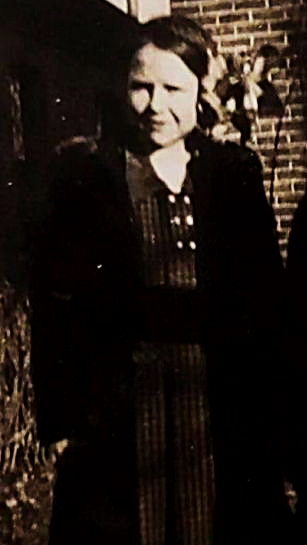
Florence Grange | Courtesy of FamilySearch
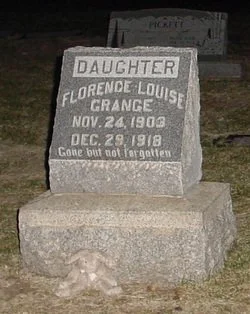
Florence’s grave at Ogden City Cemetery | Provided
Let’s start with Florence Granger, whose grave in the Ogden City Cemetery has been the center of an enduring local legend.
Florence was born in Ogden on Nov. 24, 1903, to Ralph and Dottie Granger. Her friends and family called her Louise. According to the legend, Granger was sitting on a curb near her home at 28th street and Grant avenue when she was struck and killed by a car whose driver failed to see her. Locals say her ghost appears first as a green light. If someone flashes their car headlights three times at her tombstone, the green light supposedly transforms into the figure of a young girl who floats toward the car.
The historical record, however, tells a very different story.
Florence was a student at Ogden High School when the Spanish Influenza pandemic reached Ogden in 1918. In December, she became ill after a tenant staying in the home of her aunt and uncle, Edna and Joe, contracted influenza and passed it to the family. Florence was sick for approximately 10 days before developing endocarditis, an infection of the heart valves.
She died at her home in the early morning hours of Dec. 29, 1918. She was only 15 years old.
Two days later, Florence was buried in the Ogden City Cemetery.
Somehow, over the decades, the tragic story of a teenage girl who died during the influenza pandemic transformed into the tale of a ghost waiting beside her grave for unsuspecting teenagers to summon her with their headlights.
Frank Yentzer
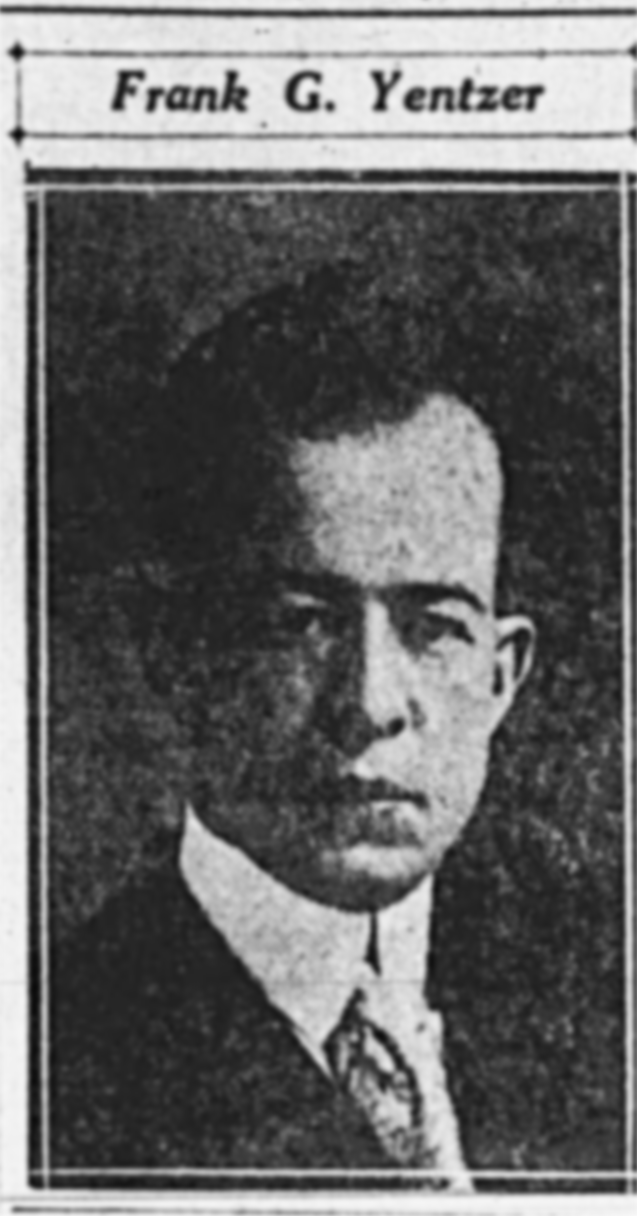
Frank G. Yentzer; Salt Lake Tribune, February 27, 1923 | WSU Special Collections and University Archives
Florence isn't the only ghost with a story rooted in Ogden's history. Inside the Museums at Union Station, another local legend involves Frank Yentzer.
Frank came to Ogden in 1917 and worked as a ticket taker at the station. After only about four years on the job, his life was cut short on Feb. 26, 1923.
Just weeks earlier, a devastating fire had damaged the Union Station building. Much of the structure had been reduced to a shallow shell, but Union Pacific initially decided that enough of the building remained to rebuild around the existing structure rather than tear it down entirely.
By Feb. 26, however, the railroad had changed its plans.
Yentzer, only 32 years old, was working in an office that had been temporarily moved onto the platform to make room for repairs. The large clock tower had suffered some of the greatest damage, and workers were repairing the roof above the platform.
Then disaster struck.
A strong gust of wind loosened part of the roof structure, dislodging a massive, cone-shaped piece of sandstone. The roughly 250-pound stone fell approximately 50 feet, crashed through a skylight where it landed directly on Yentzer.
He suffered a cerebral hemorrhage and died before he could reach the hospital.
Yentzer left behind a wife and two young children. His body was returned to Ottawa, Illinois, where he was buried.
But according to the ghost stories surrounding Union Station, Yentzer never completely left Ogden. Visitors and employees have reported hearing footsteps echoing through the station's halls — footsteps attributed to the ticket taker who supposedly still walks the building where he died.
Frances Williams
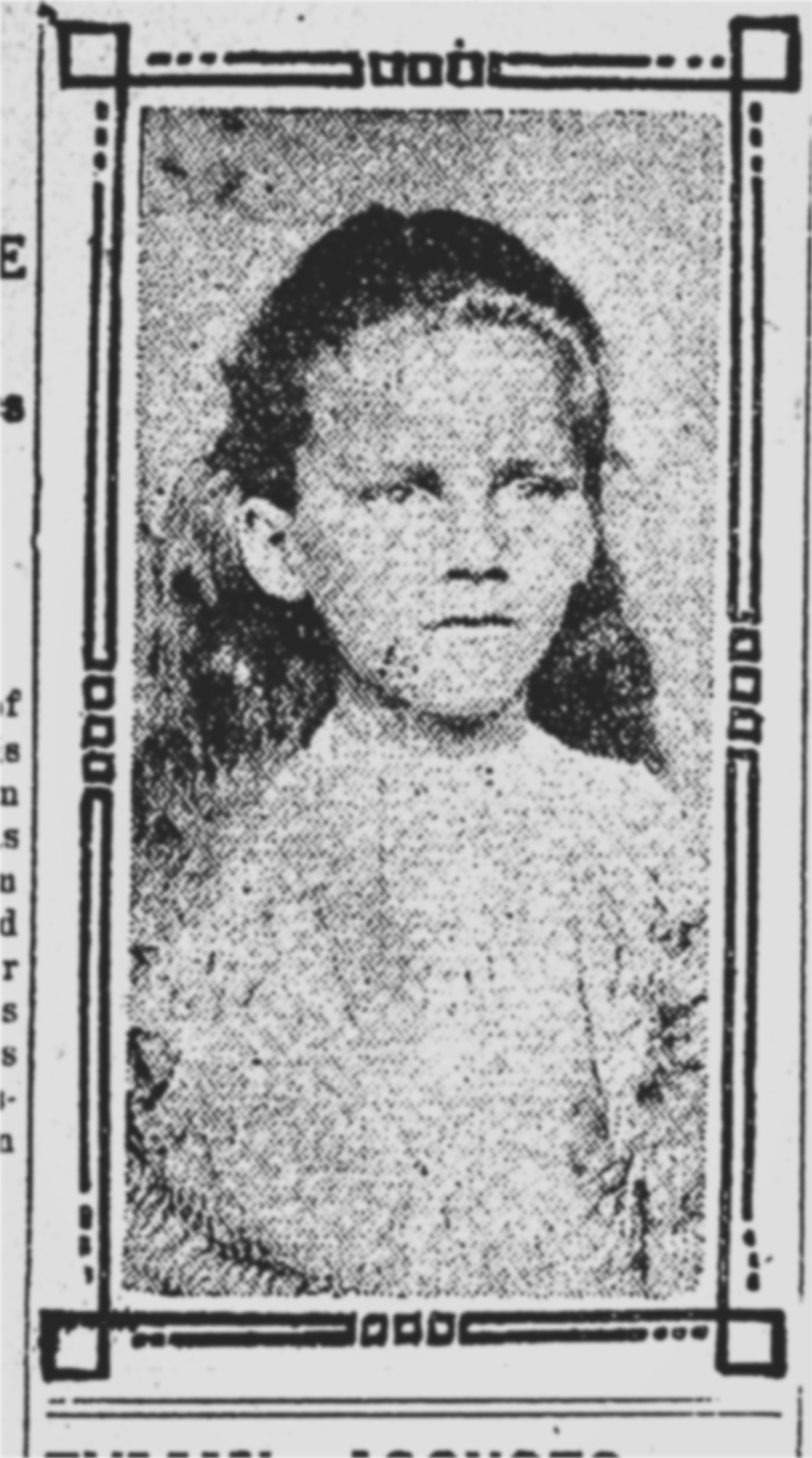
Frances Williams; Salt Lake Tribune, August 17, 1913 | WSU Special Collections and University Archives
Yentzer isn’t the only ghost who is said to haunt the halls of the Union Station. Frances Williams’ story begins not with a legend, but with the story of a crime that made headlines in 1913.
On June 24, 1913, Minnie Ekman, the mother of Williams, was arrested and charged with the murder of her 10 year old daughter.
When questioned by police, Minnie said her husband had beaten her and abandoned the family without any means of support. She claimed she had tried unsuccessfully to find help from people in the city. Minnie then said she considered sending Frances to an orphanage, but Frances become upset at the idea.
According to Minnie's account, she eventually came to believe that death was the only way out.
She claimed that she chloroformed Frances and then attempted to chloroform herself.
When Minnie awoke the following morning, she discovered that her daughter was dead. She placed her daughter's body inside a large steamer trunk. With the help of her second ex-husband, Mr. Anderson, she took the trunk to the train station in Salt Lake City and had it shipped to Ogden.
Several days later, the trunk was discovered in the baggage area at the Ogden Union Station after employees complained about a terrible smell. When a baggage handler examined the trunk, he noticed a lock of hair protruding from it and called police.
Inside, they discovered Frances's body, which had been packed into the trunk with pillows, a blanket, and bedclothes.
Later that afternoon, Minnie and Mr. Anderson arrived in Ogden to claim the trunk. Both were arrested and charged with murder.
Newspaper accounts offered conflicting explanations of what had happened. Early reports claimed that Frances had been strangled. Other reports suggested that Minnie had wanted to reunite with Mr. Anderson, who supposedly disliked Frances, and that Minnie had killed her daughter so the two could leave together.
Ultimately, investigators determined that Mr. Anderson had not participated in Frances's death, and he was released.
Minnie was tried and found not guilty by reason of insanity. She was committed to the state mental hospital in Provo.
Today, Frances's story has become part of the folklore surrounding Union Station. Her death is remembered not only as a tragic crime from Ogden's past, but also through stories of a young girl's spirit lingering around the station where her body was discovered.
The Stories Behind the Ghosts
Whether you believe in ghosts or not, these stories reveal something fascinating about Ogden's history. Florence Granger, Frank Yentzer, and Frances Williams were real people who lived — and died — in very different circumstances, but their stories became intertwined with the places where their lives or deaths intersected with the city.
The ghost stories may change from generation to generation, but the historical records give us something even more intriguing: a way to look past the legend and discover the real people behind Ogden's ghosts.