

Good Company Theatre’s ‘Waiting For Godot’
REVIEW
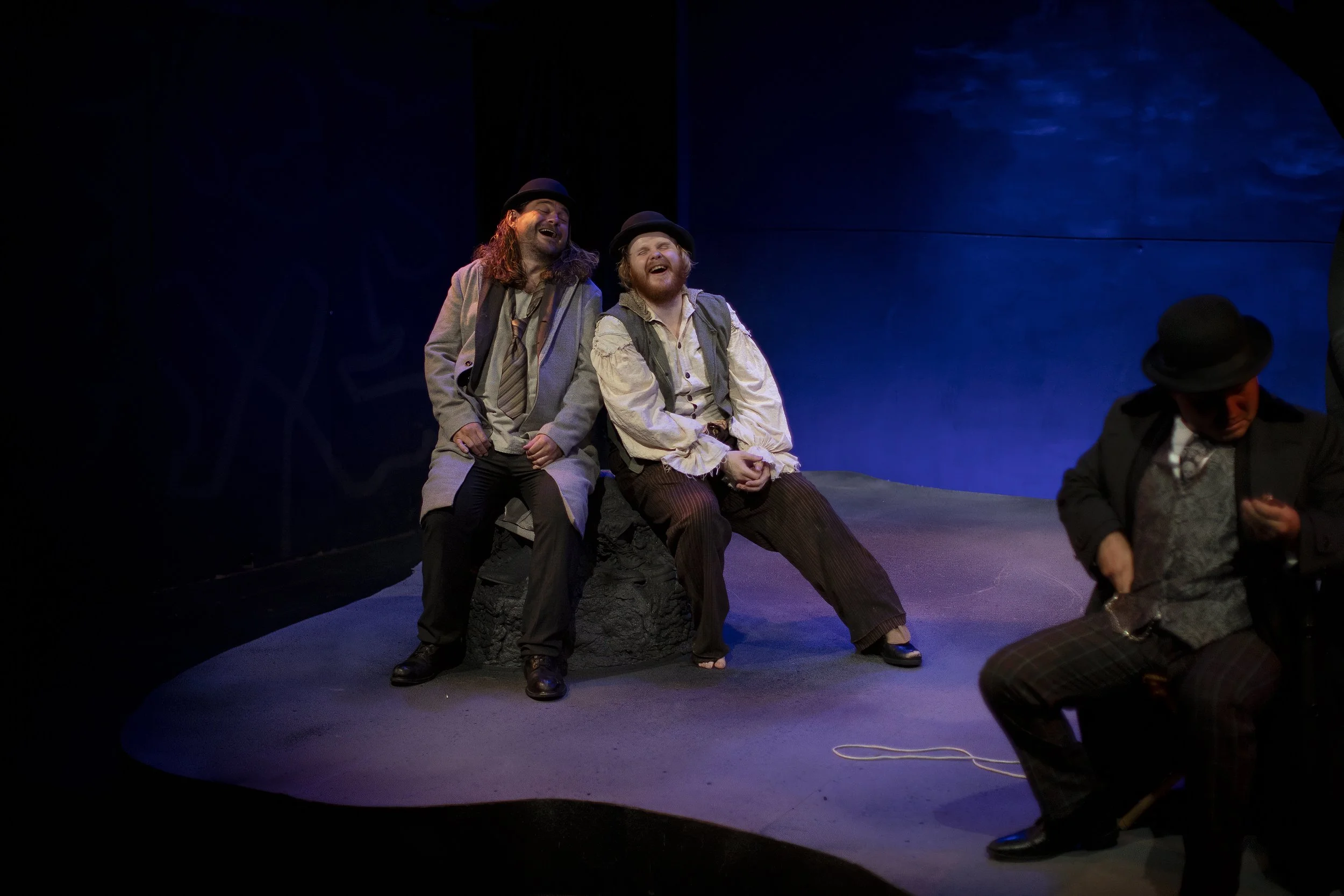
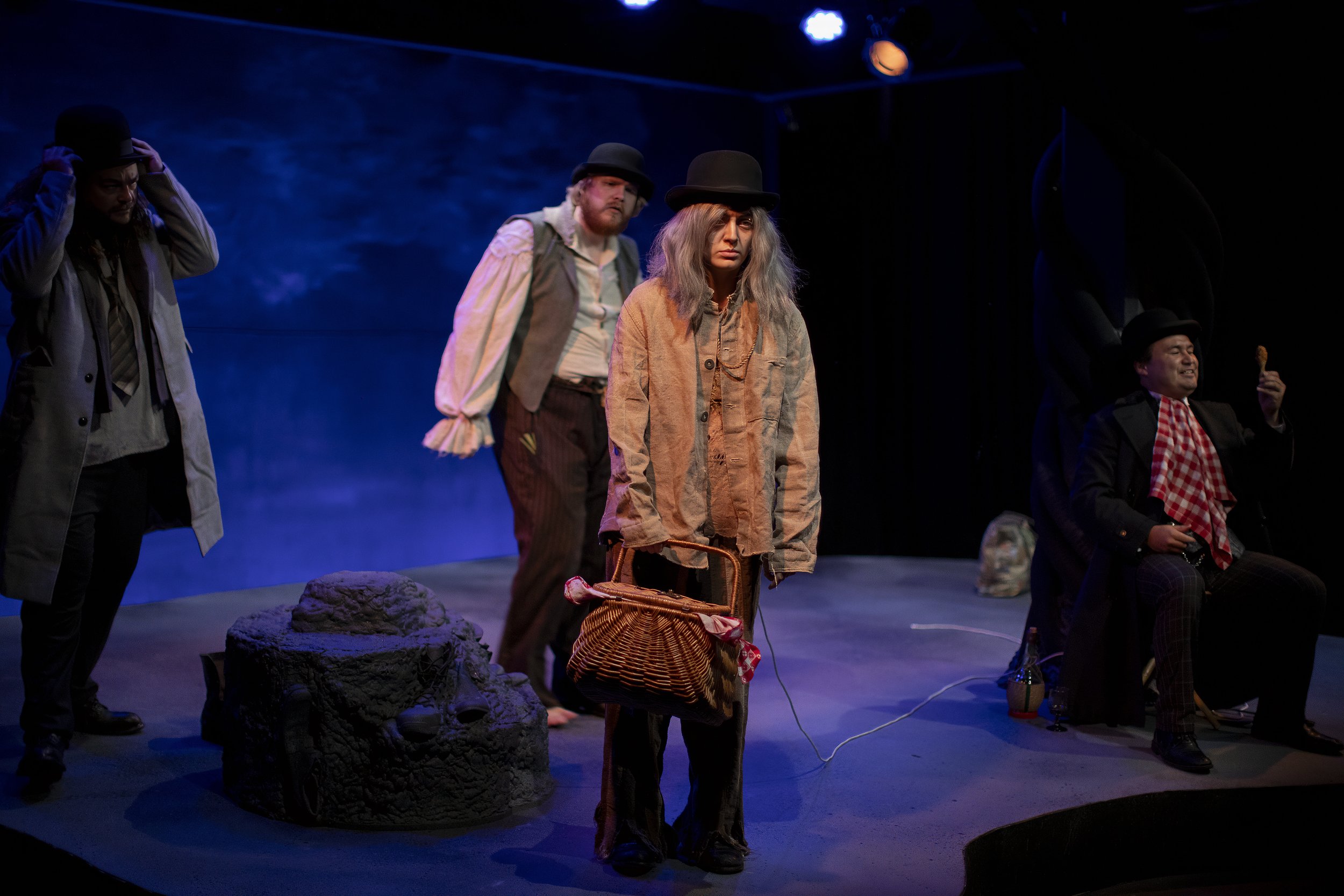
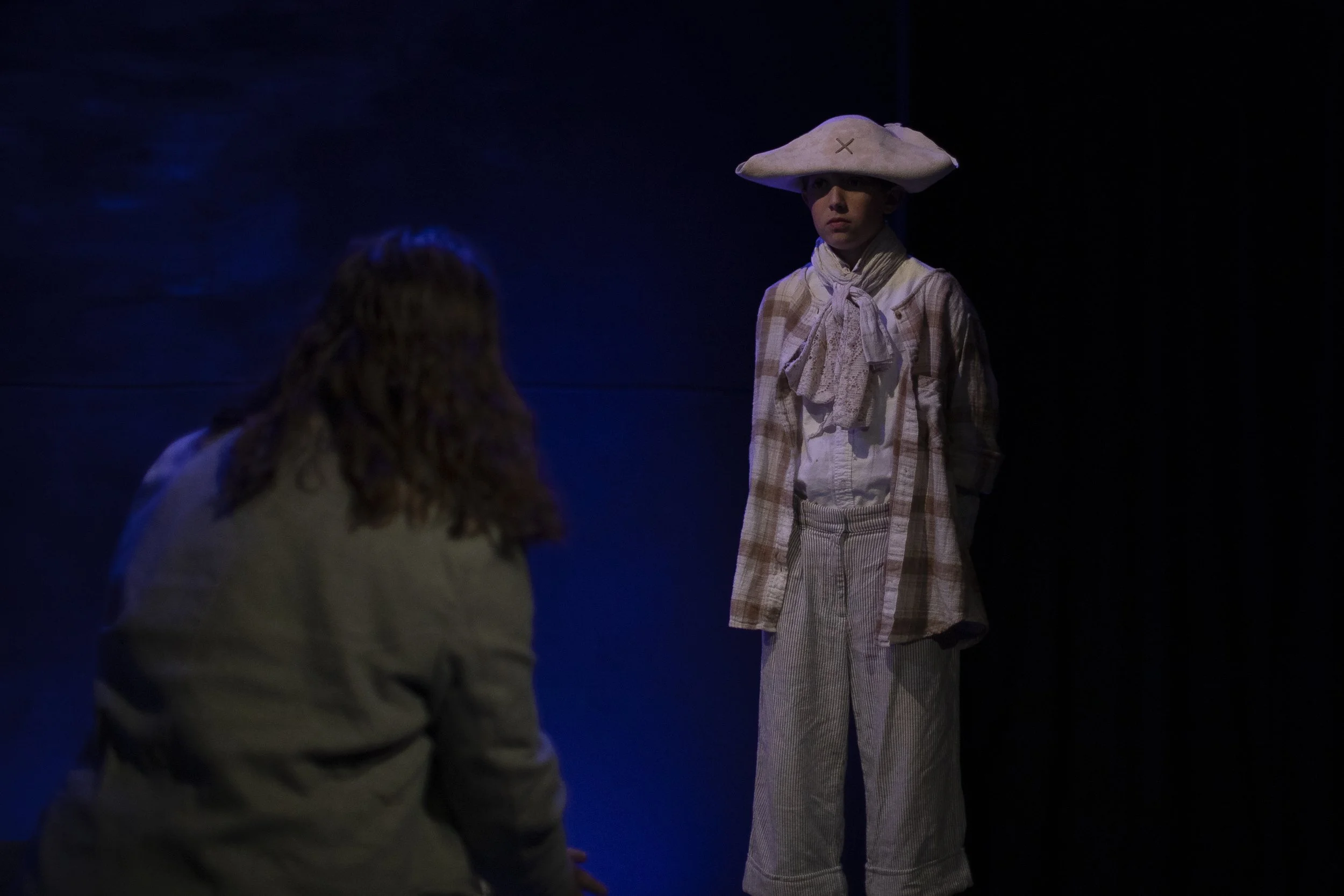
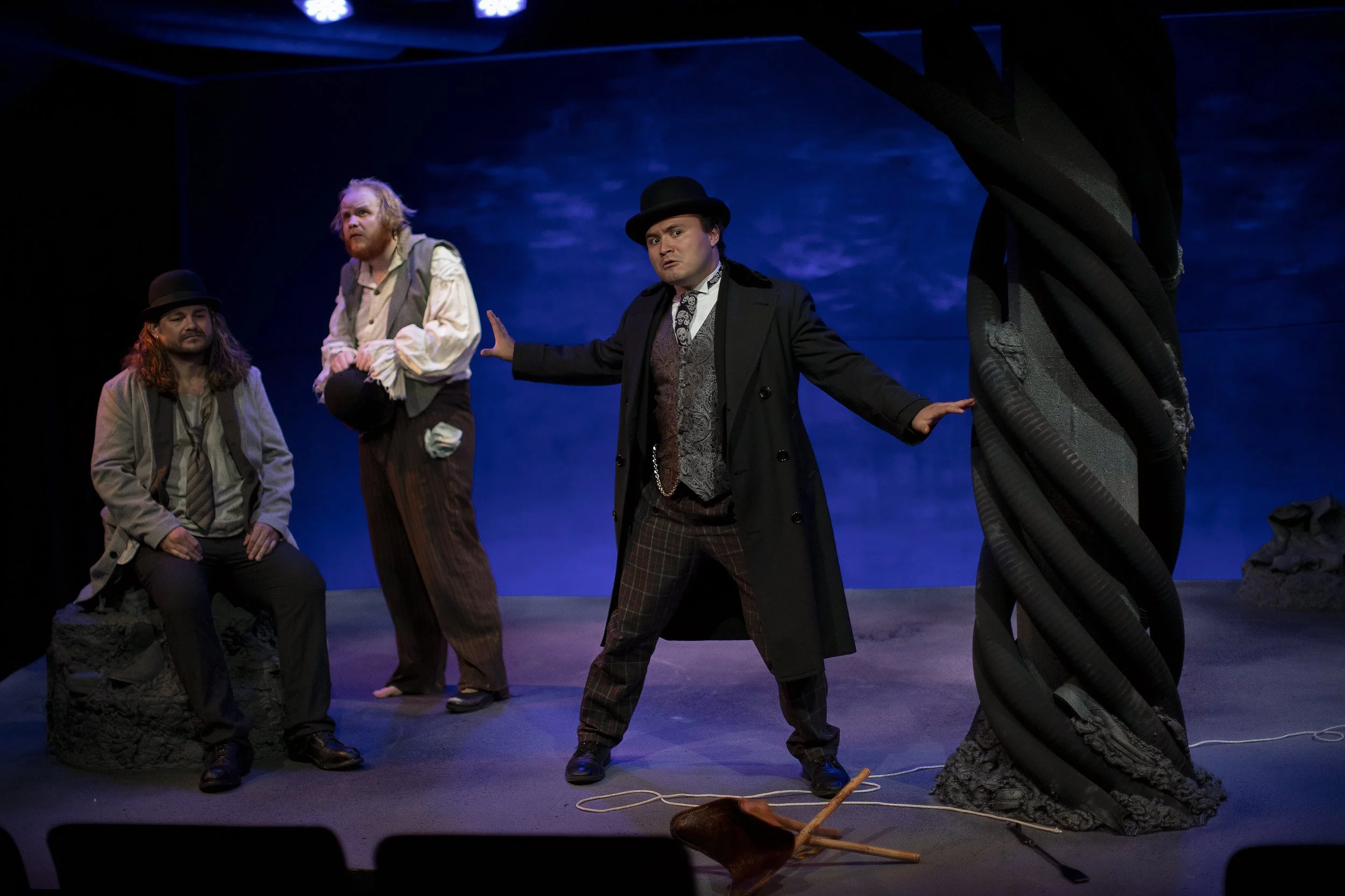
Production photos courtesy of Good Company Theatre
Waiting for Godot
by Samuel Beckett
Directed by Mark Fosson
July 30-Aug. 16
Good Company Theatre
2404 Wall Ave.
(801) 917-4969
goodcotheatre.com
Two tramps are waiting for the one who will improve their lives. Two eccentrics arrive, one on the end of the other’s rope. I get to make up what it means to me. Every time I’ve seen this play I hear a different meaning.
This play was written the year I was born, 1948; it was published in 1952 and first performed in 1953 in French. The playwright premiered an English version in London in 1955. Beckett received the 1969 Nobel Prize in Literature. In 1998 London’s Royal National Theatre voted “Waiting for Godot” as “the most significant English-language play of the 20th century.”
I first read and saw the play as a theater student in the late 1960s. I saw it again in the 1990s at a professional theater in Salt Lake City. Now a third generational view brings me another look — and what a leap it was.
The first two times I saw it the themes were “existential,” as existentialism was a popular philosophical topic in the 1950s, resulting in a theater style called Theatre of the Absurd. If nothing had intrinsic meaning, anything could be said — and was.
This time when I see and hear with my 2026 eyes wide open, I hear the script as questioning our very existence, our survival in an ecosystem that is devoid of what we expect from civilization. All that is left in the landscape is one dead tree and one huge rock — useful for stage action like hiding and sitting and sleeping, etc. There is a road but only two travelers have passed them throughout the long day, and one messenger from Godot himself, “He can’t come today but surely tomorrow.”
The two main characters really described the current stalemate in politics in general. Poor Didi is a working class schmuck, his feet are always sore, he’s always tired, he’s always hungry, he has an explosively violent temper when he is frustrated; he is the victim of the universe, waiting for a savior. He is “handled” by his companion Gogo. Gogo is the reasonable one, the philosophical one, the stoic, mainly managing to operate on hope while waiting for the same savior.
Both of them are caught in their waiting. They do nothing because they rationalize it is the safest thing to do. The use of waiting almost becomes a character in the hands of the director. The long, and I mean long, periods of absolute silence and inactivity emphasize the emptiness of the waiting and our own involvement in it.
Pozzo is a rich and cruel master in the first act, brutally abusing and overworking his servant Lucky, who is led by a long rope with a noose around his neck. Lucky, when commanded to speak, spewed an incredible mix of politics, news, sociology, every other discipline from universities, and a lot of qua qua, qua until silenced back into subservience.
The apparent reference to today’s Epstein Class, the 1 percent, seemed undeniable to me. In the second act, Pozzo is stripped of his wealth, blinded, and struck to the ground unable to get up. By the second act, Lucky is actually leading blind Pozzo with the same rope. Lucky has not been liberated
The second act discussion between Didi and Gogo about the how and why they, as members of society, have some responsibility to help people when help is needed is especially funny and nonsensical when Pozzo is actually calling out to them for help throughout the discussion. They are too busy talking to actually help. Another political discussion leading to doing nothing.
As Didi becomes harder to manage, Gogo works harder to avoid the terror of waiting with no end, especially when he begins to hear the cries of those oppressed by the system throughout the long wait. Hearing their anguish finally breaks Gogo and it broke me, too. When he cries he can’t take it any more, I cried, too — for him and every suffering fool who lived in anguish in their brief and frightened lives.
All actors carried heavy roles expertly. The design team created the dystopian atmosphere required. The set designer has cleverly included working class boots in the rock and the tree. I only noticed this after the play was over. The director brought to me a new understanding of this theater classic. I think he is younger than my own children so this is good for me to keep up with changing ways of understanding. I am delighted to say that in a sense, I have watched Boy, now in the eighth grade, since he was a newborn to parents I knew of from theater.
This is a hard play. It requires a lot from the audience. Theatre of the Absurd doesn’t make sense if you aren’t prepared for the fact that it isn’t necessarily meant to make sense. In the case of this play, it is like a sound bath of the working class frustration: When is someone going to fix this? When is someone going to save me?
Prepare yourself for self-examination. What are you waiting for while you do nothing?