

Documentary inspires Weber County resident to advocate for Great Salt Lake
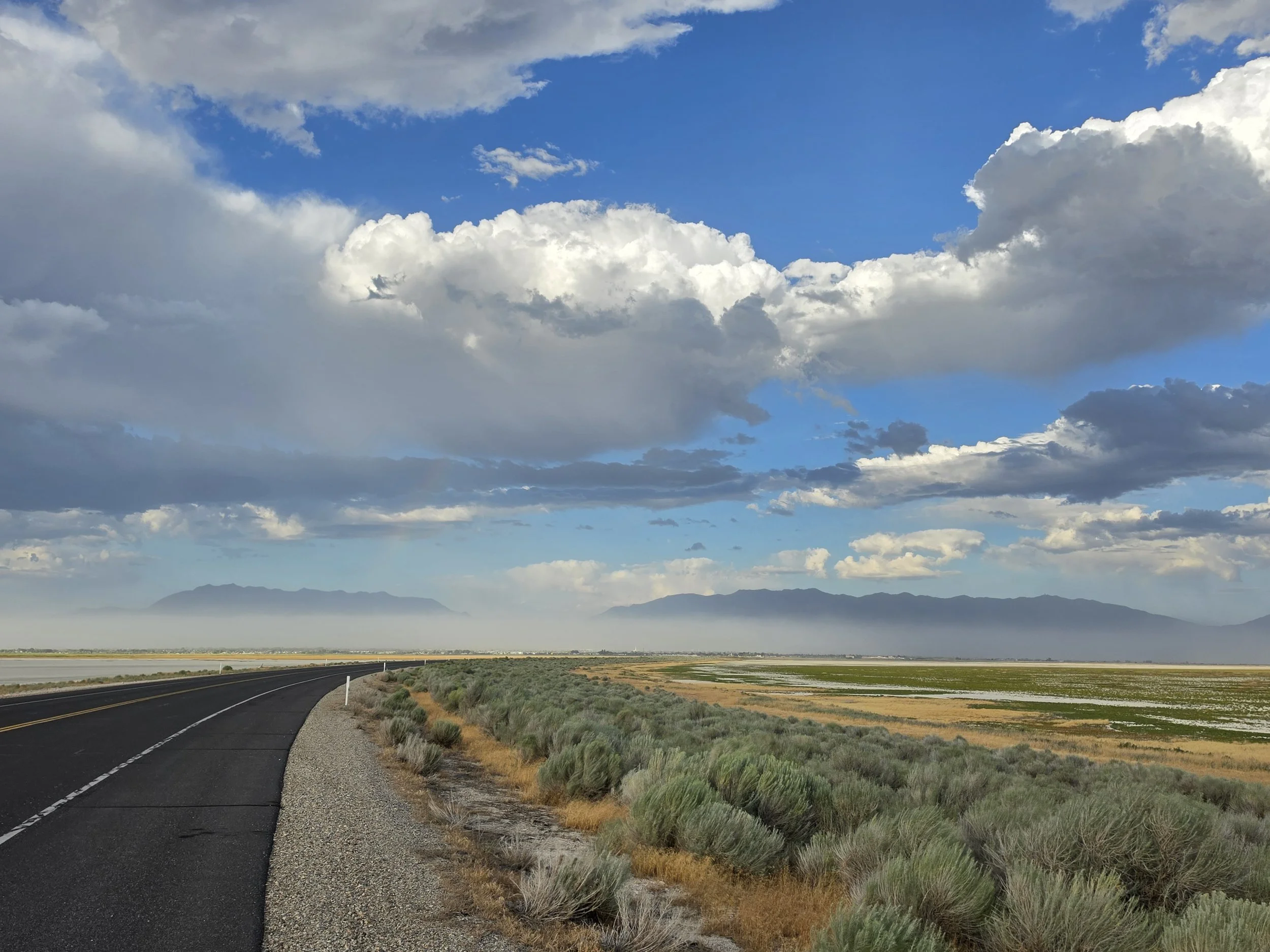
Image of the dust storm at the Great Salt Lake on July 8. Travis Padilla
On July 31, Grow the Flow Utah hosted a free screening of “The Lake” at Weber State University, a documentary about efforts to save the drying Great Salt Lake that debuted at the 2026 Sundance Film Festival. After viewing the film, Travis Padilla of West Point was moved to action. One scene shows scientists reviewing toxic dust blowing directly into Padilla’s neighborhood. Along with his wife, Ashley, Padilla signed up to volunteer with Grow the Flow, a local nonprofit organization actively working to help save the lake and represented in the film by its executive director Ben Abbott.
Living near the Great Salt Lake Causeway, Padilla had concerns about the lake, but his day-to-day life continued. “I would say before I got involved, I was absolutely one of the problems … you just go about your life and you turn on your water, whether it’s your lawn or wherever else, and it just magically appears.”
Padilla, a Utah native born in 1982, recalls when the lake was full. The views at Saltair, a historic concert venue on the lake’s shore, changed drastically between the Green Day show he attended in 1997 and a 2023 Weezer concert.
Rising concerts stem from record-low snowfall, increasing temperatures, a proposed massive data center in Box Elder County, and visible dust. “When it comes to the Great Salt Lake, it doesn’t matter if you’re left or right,” Padilla said. “It’s a nonpartisan issue.”
Eighty-five percent of Utahns are concerned about the lake, Padilla said. “If you live in Utah, it’s your issue.”
Padilla’s volunteer work is centered in Davis and Weber chapters, dedicating about two hours daily to legislative outreach, media relations, events like Ogden Twilight, and photography.
Twelve million migratory birds and myriad wildlife depend on the lake, but its disappearance poses ecosystem, health, and economic threats. Padilla said saving the lake, which entails mitigating the toxic dust, could cost $2 to $5 billion, comparable to the Aral Sea disaster in Uzbekistan, which triggered a massive increase in diseases.
“The Great Salt Lake and surrounding areas could become absolutely unlivable,” he said. “The worst case scenario: The lake dries up, and there’s no more lake effect.”
The valley’s lush landscape depends on the lake, Padilla said. “If you go 500 miles west of here, it's nothing but desert until you reach Lake Tahoe … that's what the future of Utah looks like … imagine Wendover.”
Despite the challenges, Padilla remains hopeful. “It’s a human caused issue, which means there are human caused solutions,” he said.
Broad public support has captured lawmakers’ attention. Padilla highlights three signs of progress: a Utah lawmaker ranking the lake among their constituents’ top three concerns; Rep. Jill Koford of Ogden passed House Bill 79, which requires new large data centers to publicly report their water use; and The Church of Jesus Christ of Latter-day Saints installed smart controllers in 99 percent of their watershed properties, estimating a 20 percent reduction in water use this year at their properties.
Padilla sees a path forward, though he notes that no inland, saline lake has ever been restored. “If we can create a blueprint for that, we can replicate this across the world.”
Utahans can help by limiting outdoor water use, volunteering with Grow The Flow Utah, or displaying a free yard sign. More information is available at growtheflowutah.org.