

25th Street’s ‘alleged’ Rose Rooms
Before it was home to Alleged and Moxie bars, this building lived many lives at the heart of Ogden’s downtown
OGDEN HISTORY
By Sarah Langsdon
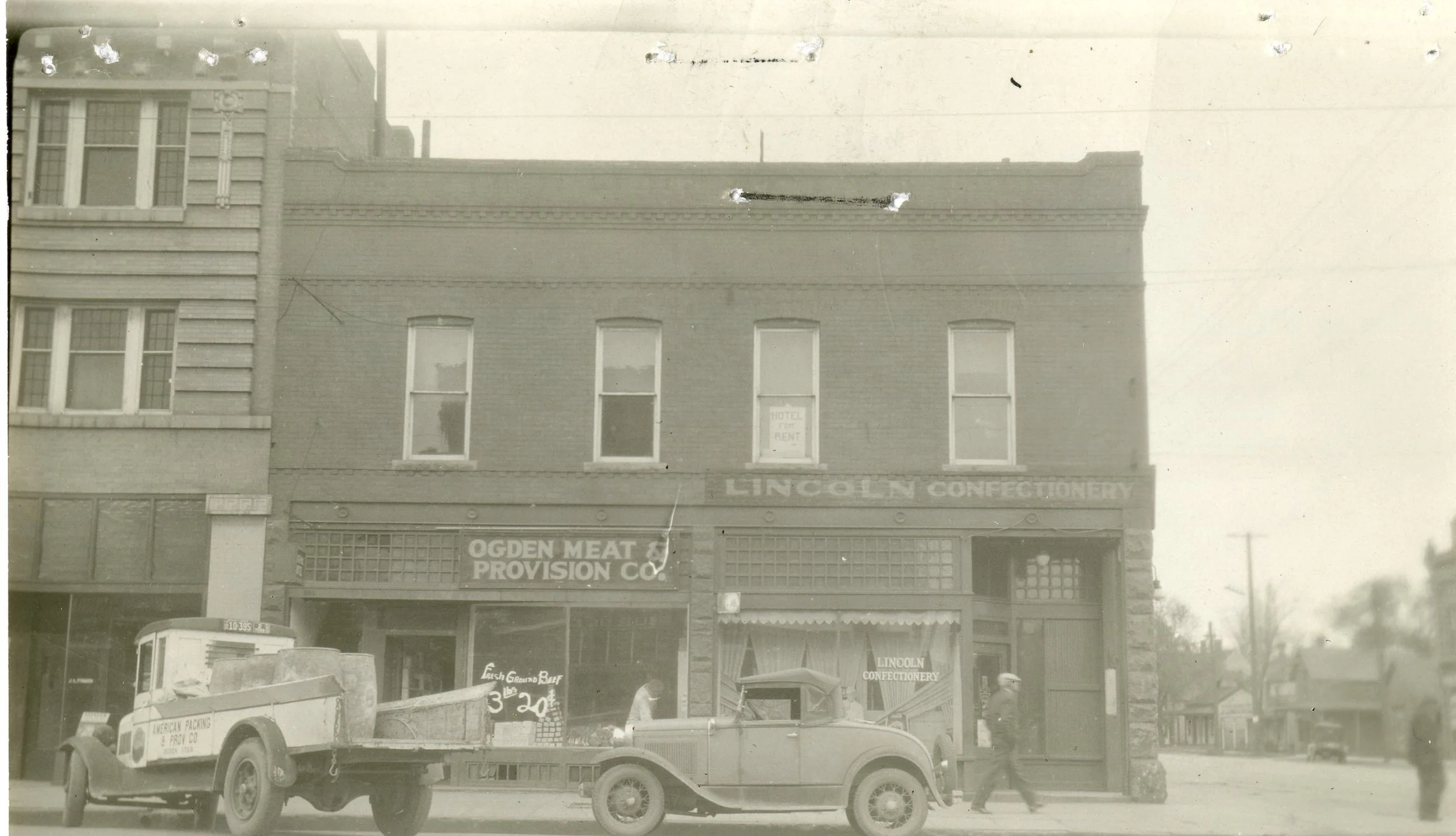
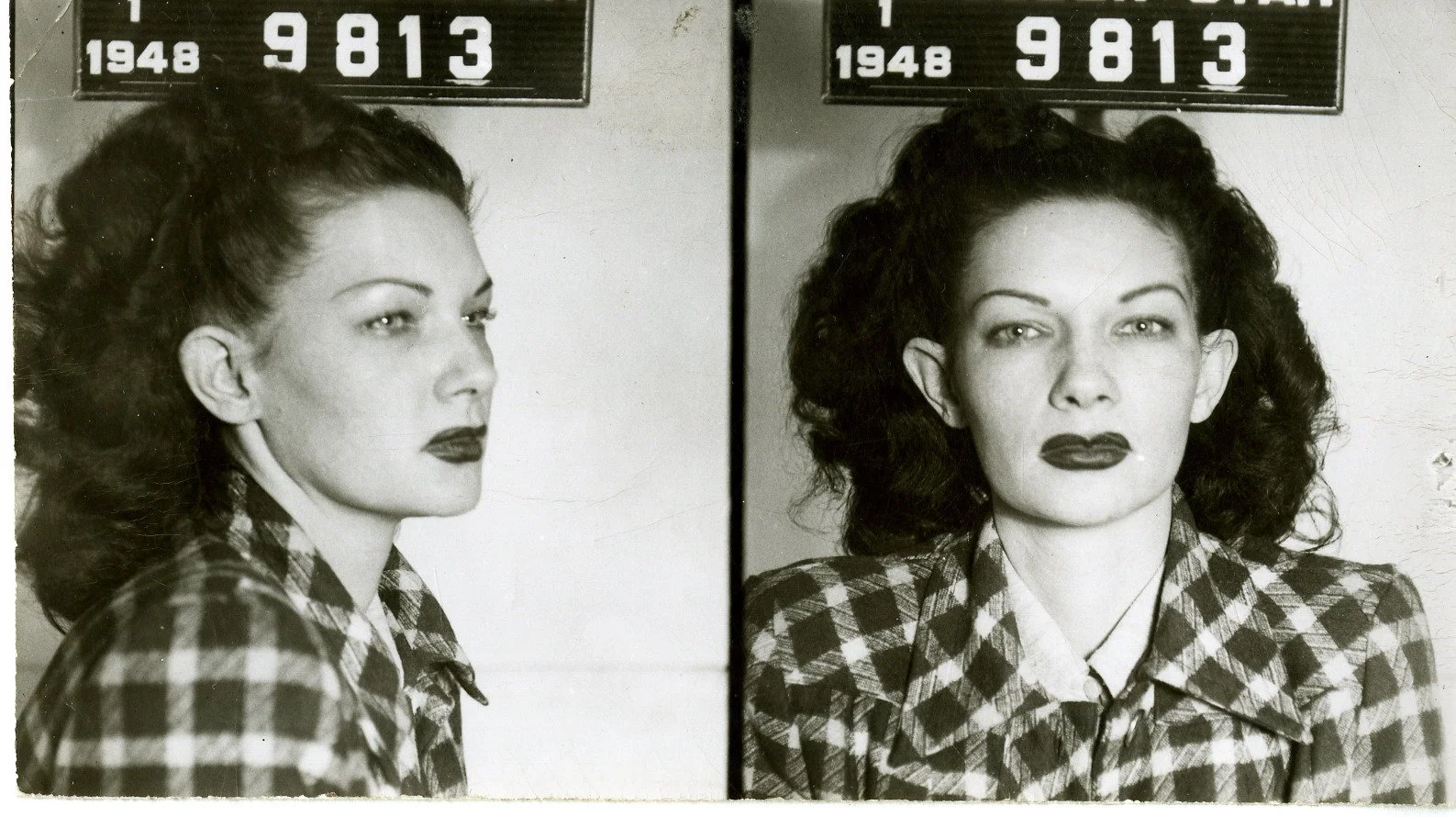
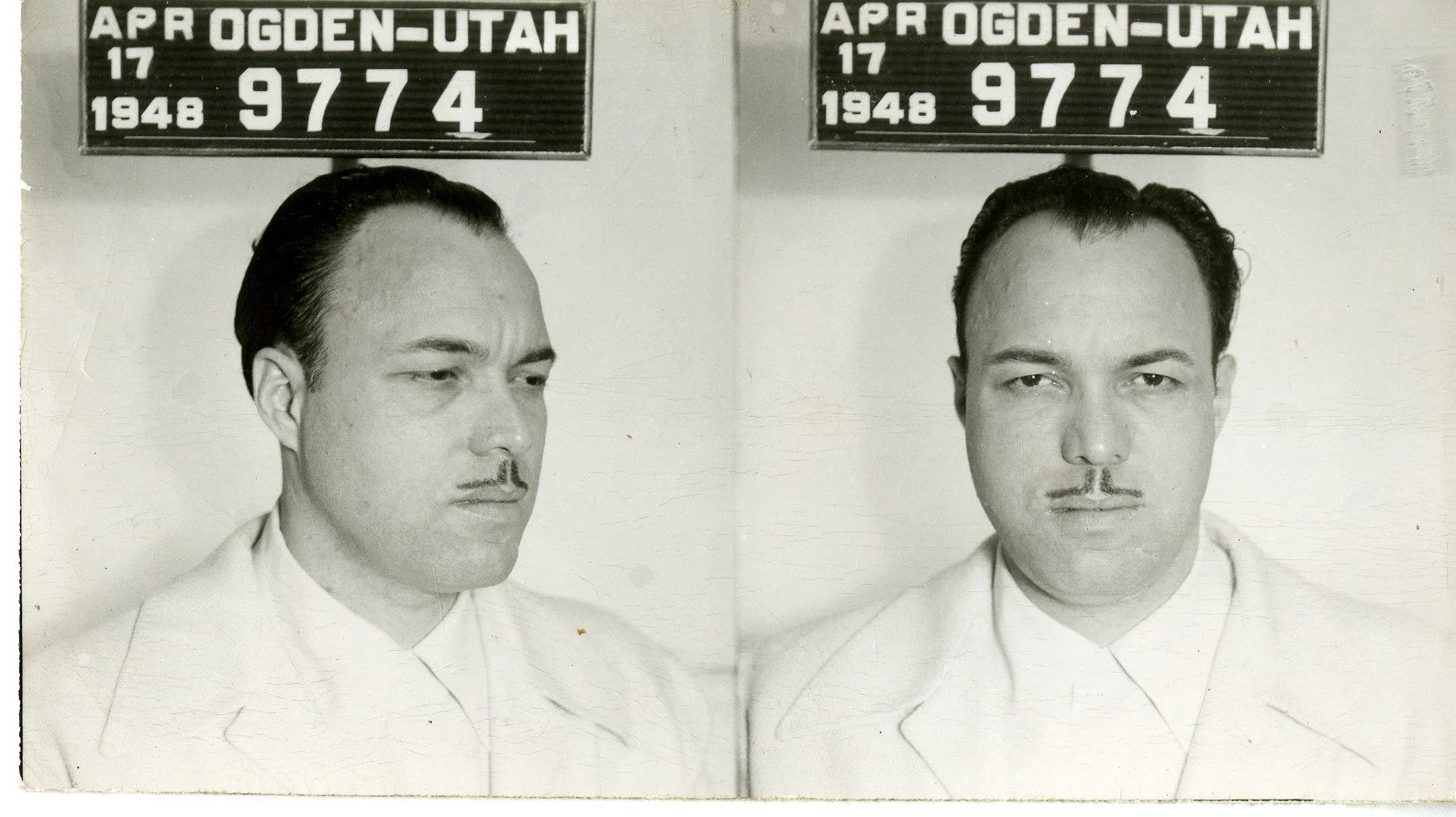
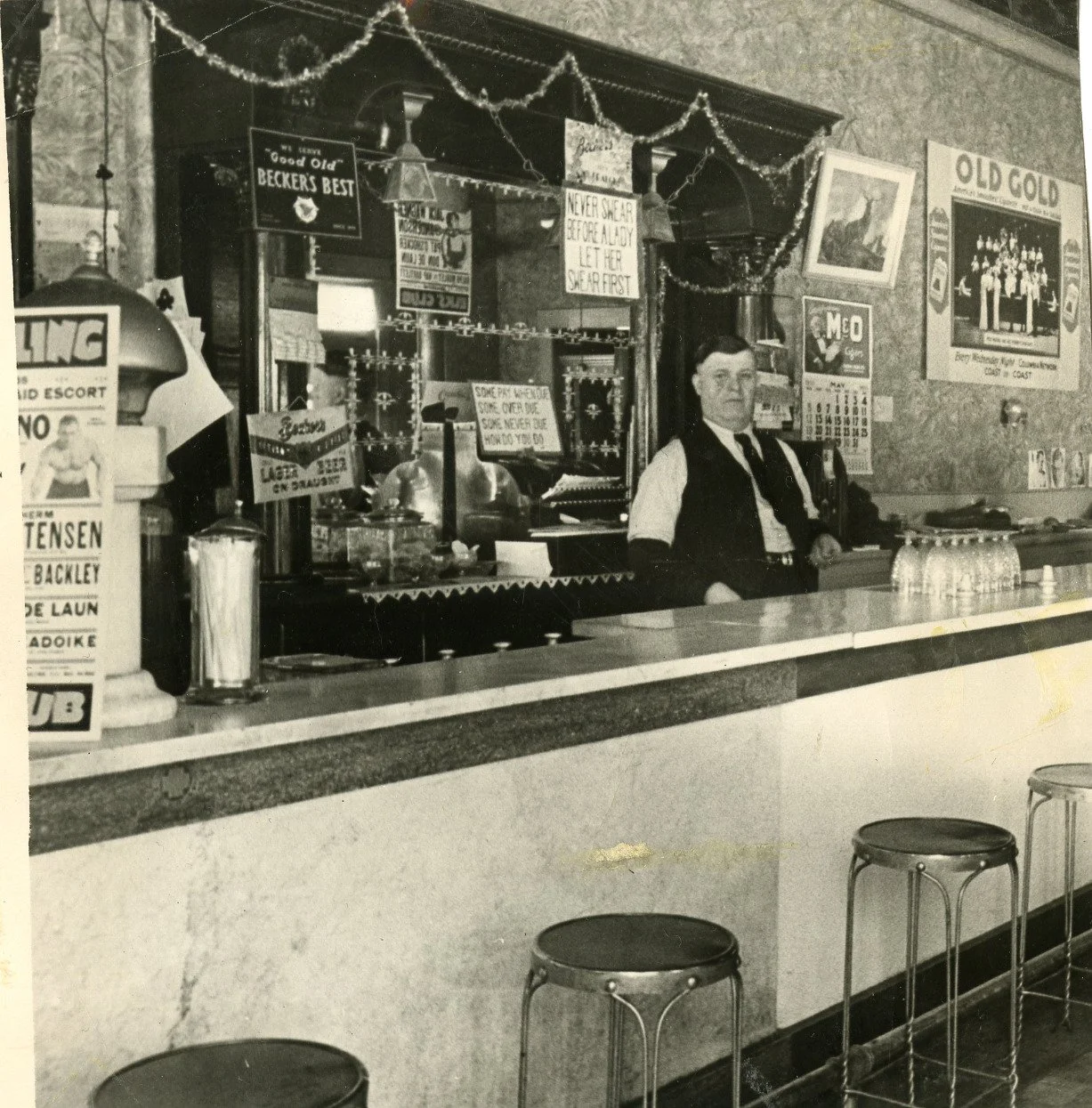
Left to right: The building that houses the Rose Rooms, now Alleged Bar, located at 201 25th St.., Rose Davie mug shot, William Davie mugshot, Luis Prantil, owner, at the Lincoln Confectionary in the 1930s. Courtesy of Special Collections and University ArchivesCourtesy of Special Collections and University Archives
Long before 201-205 25th St. became home to Alleged and Moxie bars, the building lived many lives at the heart of Ogden’s ever-changing downtown. Over more than a century, the address transformed from saloon to hotel, soda parlor to brothel — its walls absorbing the stories, scandals, and secrets of 25th Street along the way.
The site first appears in the historical record in the 1880s as the Shamrock and Thistle Saloon, owned by F.H. Thompson. Thompson advertised the establishment as a “popular resort” serving wines, liquors, beers, and cigars “of the best quality.” His newspaper ads warmly invited not only old friends but also new patrons, reflecting the booming and social atmosphere of railroad-era Ogden.
By 1899, the original saloon had been demolished and replaced with the current brick building. The new structure initially housed the C.C. Keller Rooms, with a bakery operating on the ground floor. Like much of 25th Street, the building adapted constantly to the needs of the city. By 1925, it contained a grocery store, delicatessen, and the Rock Springs Hotel, serving travelers, workers, and residents moving through Ogden’s busy downtown corridor.
During the 1930s, the building gained one of its more colorful proprietors when Louis Prantil relocated there after the devastating Ogden Hot Springs fire. An Italian stone mason by trade, Prantil opened a confectionery and soda parlor that quickly became a local favorite. But beneath the wholesome façade, stories circulated about the elaborate system he allegedly operated during Prohibition. According to local lore, Prantil maintained a still in the basement connected to multiple taps behind the counter — one pouring soda water, the other whiskey for trusted patrons who knew what to ask for.
The building entered its most infamous chapter in the late 1940s. Prantil and his wife rented the upper floor to William and Rose Davie, who initially claimed they intended to operate a modest rooming house known as the Rose Rooms. Before long, however, the establishment evolved into one of Ogden’s most notorious high-end brothels.
The entrance to the operation was protected by a heavy wood-and-steel door fitted with a peep window so staff could identify customers — and avoid police raids. Inside, Rose decorated the parlor and bedrooms with her signature animal-print décor. The rooms themselves were reportedly wired with listening devices, allowing Rose to monitor both clients and employees from elsewhere in the building. During the prosperous postwar years, estimates suggested the Rose Rooms generated between $20,000 and $30,000 per month, making it one of the most lucrative vice operations in Ogden.
Despite constant police scrutiny, Rose Davie appeared almost untouchable. In 1948, her operation made headlines after a Weber Wildlife Federation party devolved into chaos when strippers distributed matchbooks advertising the Rose Rooms. Fights broke out, bottles were thrown, and police descended on the scene. The scandal resulted in Rose losing her business license, though the closure did little to slow operations.
The following year, a court injunction ordered the Rose Rooms shut down. Rose and William claimed they had never received notice and continued business as usual. At the same time, the couple reportedly acted as police informants, giving them a complicated and at times protected position within Ogden’s underworld.
That protection eventually ran out. In 1953, Rose and William were convicted of tax evasion and sent to federal prison. After their release, they relocated to Las Vegas in 1958. The couple later divorced, and Rose ultimately moved to Mexico, where she died in 1980.
Today, visitors climb the stairs at Alleged unaware that they are walking through layers of Ogden history. Some of the tables are reportedly made from the original brothel room doors, physical remnants of the building’s hidden past. And if those walls could talk, they would likely tell stories of railroad workers and bootleg whiskey, secret knocks at steel doors, whispered deals, and perhaps even the soft growl of Rose Davie’s beloved pet ocelot echoing through the halls of old 25th Street.
This story was originally published in the June, 2026 edition of The Ogdenite print newspaper. Subscribe here.